

| Product and type | Listed spec | Planning use |
|---|---|---|
| beyerdynamic DT 770 (wired, closed-back, over-ear) | 80 ohms; 3.5 mm connection; 3 m straight cable | A closed-back wired baseline for a fixed listening seat. The long cable suits a desk better than a commute. |
| Dekoni Audio Blue (wired, over-ear, planar magnetic, semi-open) | 50 ohms; stated range 20 Hz to 20,000 Hz | A semi-open planar choice for relaxed home listening. Check the amplifier’s output rating before pairing. |
| LORELEI X6 (wired, over-ear) | 3.5 mm jack; 1.45 m cable; 40 mm drivers; passive noise control; no Bluetooth | Simple wired listening for people who accept passive isolation instead of noise cancelling. |
| INFURTURE Active Noise Cancelling | 32 ohms; stated range 20 Hz to 20,000 Hz | A noise-cancelling option for noisy travel. Verify the battery claim, because the listing contradicts itself. |
| Douk Audio T14-EQ (phono preamp with headphone output) | Specified for 16 to 200 ohm headphones; 250 mW at 32 ohms | Shows how an amplifier’s range is stated: an ohm span plus power at a named load. |
| Luxury & Precision W4 (portable USB DAC and headphone amplifier) | 110 mW through 3.5 mm; 420 mW through 4.4 mm balanced | A portable DAC and amp whose available power depends on which socket you use. |
These figures come from maker listings summarised in a headphone listing roundup and a DAC and amplifier listing roundup. They are listed values, not independent lab measurements.
The best headphones for music are the ones matched to how you listen: closed-back wired for focused desk sessions, noise-cancelling for travel, water-rated earbuds for workouts. Check impedance against your source before you buy.
Buy for the place you listen most, then confirm the electrical match between headphone and source. The same logic extends to speakers and turntables further down the page.
Choosing by listening purpose
Purpose settles the headphone type before any specification does, so decide where and how you listen first.
Focused listening at a desk
A fixed seat removes most of the compromises that portable headphones make. Wired headphones need no battery plan and no pairing step, and cable length stops mattering when the source sits on the desk. The beyerdynamic DT 770 listing describes a wired, closed-back, over-ear model with a 3.5 mm connection and a 3 m straight cable. That makes it a clear example of a design built for a desk or studio rather than a pocket.
For relaxed listening at home, the Dekoni Audio Blue shows the other end of the choice. Its listing describes a wired, over-ear planar magnetic headphone that is semi-open. Semi-open and open designs suit rooms where nobody else is disturbed. Closed-back designs suit shared spaces. The full trade-off, including mixing and gaming use, is laid out in Open vs Closed Headphones: How To Choose The Right Style For Listening, Mixing, And Gaming (2026 Guide) – Soniqcast.
If you are weighing over-ears against in-ear monitors for the same desk, IEMs vs Headphones: Which Is Best for Your Listening Needs in 2026 – Soniqcast compares the two formats directly.
Travel and noisy commutes
Noise control is the deciding feature here, and it comes in two forms. The LORELEI X6 listing describes passive noise control and says plainly that it is passive, not active. The INFURTURE model on the same roundup is sold as active noise cancelling. If a noisy train or flight is your main use, active cancelling is the feature to pay for. If you mostly listen at a desk or at home, passive isolation is enough and costs you no battery.
Two further guides help you choose the type of cancelling. Adaptive vs Active Noise Cancelling: Which Headphone Tech Should You Buy in 2026 – Soniqcast separates the marketing terms. Active vs Passive Noise Cancelling: How To Choose The Right Headphones In 2026 – Soniqcast covers the passive route. Hearing safety is a separate question from comfort, and Does Noise Cancelling Protect Your Hearing? What Science Says And How To Stay Safe In 2026 – Soniqcast addresses it. Listeners who need to hear traffic should also read Open-Ear Vs Bone-Conduction Headphones: Which Is Right For Your Ears And Lifestyle In 2026 – Soniqcast before committing to a sealed design.
Treat battery claims on budget listings with care. The INFURTURE listing’s product title mentions 90-hour playtime, while its product details state 40 hours of average battery life. When a listing contradicts itself, plan around the lower, more specific figure and confirm it before purchase.
Workouts and running
Sweat and movement change the priorities. Weight, a secure fit and a stated water rating matter more than the last detail of tuning. The earbud and headphone spec survey lists the Apple AirPods 5 at 4.3 g with an IP57 rating, and the Beats Powerbeats Fit at 5.78 g with IPX4 for buds and case. Those figures show the range of what makers publish for sport use. They are maker-stated values, so confirm them against the product page before buying.
Water ratings are not universal. In the same survey, 37 of 111 models (33%) state an IP rating. If a pair you like states none, do not assume it survives sweat. The dedicated guide to the best headphones for running covers fit and use in more depth.
Long sessions and tight budgets
Comfort over several hours is not a specification line, which is why a spec sheet alone misleads. Weight, pad material and clamp pressure decide whether a pair disappears on your head or becomes a chore. Our guide to the most comfortable headphones works through those traits.
Budget changes which compromises you accept. At a lower price, a simple wired model that does one job often beats a feature-heavy wireless one. The best headphones under 100 guide shows where to spend and where to save.
Headphone types compared
Each type trades convenience against simplicity, so compare them on connection, power source and use case rather than on price alone.
| Type | Example listing | Listed details | Suits |
|---|---|---|---|
| Wired closed-back over-ear | beyerdynamic DT 770 | 80 ohms; 3.5 mm; 3 m straight cable | Fixed-seat listening where cable length is no problem |
| Wired over-ear, passive noise control | LORELEI X6 | 1.45 m cable; 40 mm drivers; no Bluetooth | Wired-only use at a desk or sofa |
| Active noise cancelling | INFURTURE Active Noise Cancelling | 32 ohms; product details give 40 hours of average battery life | Noisy travel, once the battery claim is confirmed |
| Noise-cancelling true wireless earbuds | Apple AirPods Pro 3 | ANC on 8 hours; 24 hours with case | Commuting when you carry the charging case |
| Sport earbuds | Apple AirPods 5; Beats Powerbeats Fit | 4.3 g, IP57; 5.78 g, IPX4 (buds and case) | Workouts where sweat resistance matters |
The wired and noise-cancelling rows come from the headphone listing roundup, and the earbud rows come from the earbud and headphone spec survey, which compiles manufacturer-stated figures.
Read the table as a decision aid, not a ranking. A wired closed-back model gives you the least to manage: no charging and no pairing. Earbuds win when the headphone must go in a pocket. Noise-cancelling over-ears sit between the two, with a larger case and a battery to look after. Pick the row that matches the place you listen most, then use the later sections to check electrical fit.
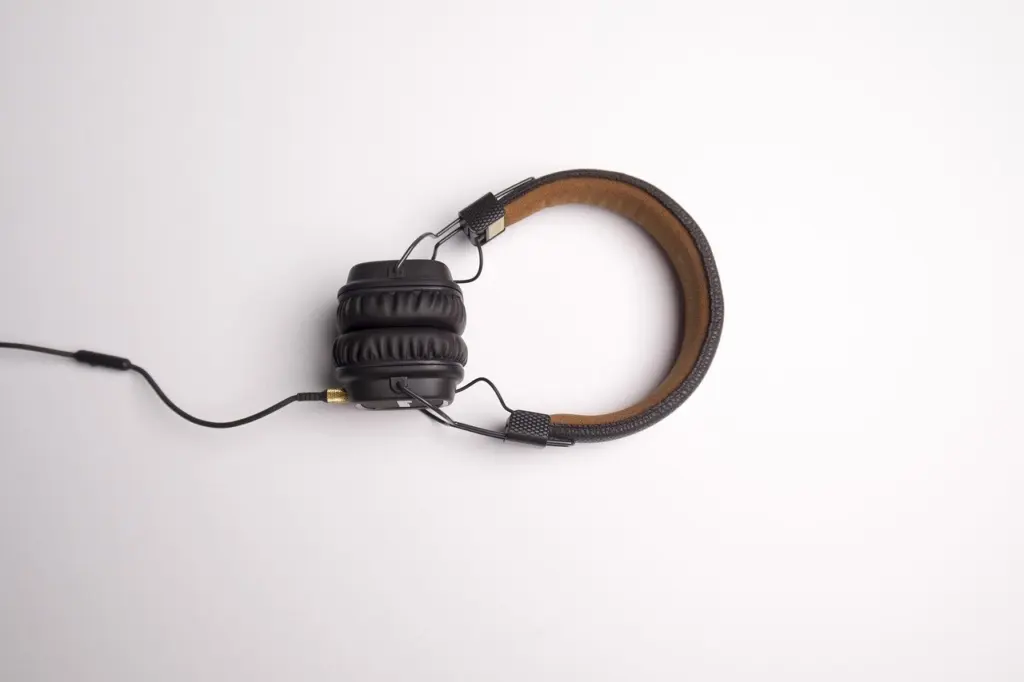
Impedance, sensitivity and matching
Impedance and sensitivity tell you whether a headphone and a source will work well together, and the headphone’s listing is where to read them.
Reading impedance
Impedance is the electrical load a headphone presents to its source, and it is listed in ohms. The listings in this guide span a useful range. The Dekoni Audio Blue lists 50 ohms, the beyerdynamic DT 770 lists 80 ohms, and the INFURTURE model lists 32 ohms. Impedance alone does not tell you how loud a headphone will play. It becomes useful when you set it beside the output rating of the device that will drive it.
Reading sensitivity
Sensitivity describes how loud a headphone plays for a given input. A less sensitive model asks more of the source than a more sensitive one with the same impedance. Many listings omit it. Gaps like that are common across spec sheets. When a listing gives no sensitivity, rely on the impedance, the amplifier’s rating at a similar load, and a listen at normal volume.
A simple matching routine
- Read the headphone’s impedance. Note the ohm figure in the listing, such as the 80 ohms listed for the DT 770.
- Find the amplifier’s stated range. The Douk Audio T14-EQ headphone output is specified for 16 to 200 ohm headphones, so every impedance listed in this guide falls inside it.
- Check power at a named load. The same output is rated at 250 mW at 32 ohms. Power is quoted at a stated load, so read the milliwatts together with the ohms.
- Choose the socket deliberately. The Luxury & Precision W4 lists 110 mW through its 3.5 mm port and 420 mW through its 4.4 mm balanced port. If you have a choice of connection, the balanced one is the one that supplies more power.
- Judge by listening. If a pair is quiet at a comfortable position of the volume control, or sounds strained when turned up, the match is poor. Change the source or add an amplifier rather than raising volume further.
A match is a range, not a single number. The tone controls on the T14-EQ, which adjust bass and treble by up to ±5 dB, show a further point: equalisation can fix a tilt in tonal balance, but it does not fix a mismatch in power.
What a DAC does and which kind to buy
A DAC (digital-to-analogue converter) turns digital audio, such as a file or stream, into the analogue signal that headphones or an amplifier can play. Every digital source has some converter inside it, and an external DAC replaces that stage with a dedicated one.
The simplest external form is the portable USB DAC. The Luxury & Precision W4 is described as a portable USB DAC and headphone amplifier, not a headphone. It also supports native DSD64, DSD128 and DSD256 playback. That support matters only if you own DSD files. For most listeners, the useful question is whether a DAC solves a problem you can actually hear, such as noise from a laptop output or a missing balanced socket.
Format support is the second thing to check. If you stream or store lossless files, Is Lossless Audio Worth It? What To Expect In Sound Quality, Formats, And Listening In 2026 – Soniqcast explains what to expect before you pay for hardware. A DAC cannot add detail that the file does not hold, so a high-resolution converter only helps if the material and your headphones can use it.
Choose a combined DAC and amplifier when you want one box for a laptop or phone. Choose a standalone DAC when your amplifier or powered speakers already do the driving. In both cases, match the connection type to your source first, because a DAC that does not suit your ports is no help.
Do you need a headphone amplifier?
Not by default. A headphone amplifier earns its place only when the headphone needs more than your source provides, or when you want a specific socket or tone control.
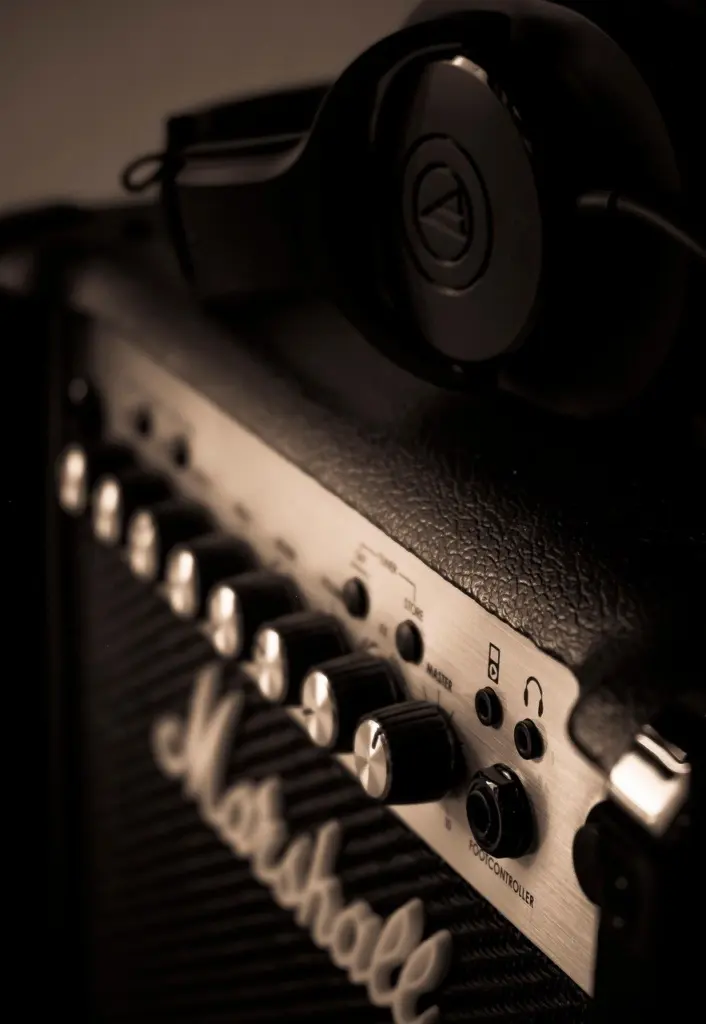
Start with the source you already own. If your headphones play at a comfortable volume, with no strain and no thinness when turned up, the source is doing its job. Add an amplifier when the listing’s impedance is high relative to your source, or when the pair is quiet and flat at maximum volume. Planar designs such as the Dekoni Audio Blue are worth checking against the amplifier’s rating before purchase.
Amplifier listings show what to compare. The Douk Audio T14-EQ gives an ohm span and a power figure at a stated load. The W4 gives different power for each output. Read those two numbers before anything else, and ignore features you will not use. A tone control, a balanced output and a phono input are all useful only if your setup needs them.
If your music comes from vinyl, an amplifier is only one stage of the chain. The T14-EQ is a phono preamp that also has a headphone jack, so a single unit can cover both jobs. The guide to a Phono Preamp For Turntable: How To Choose, Connect, And Get The Best Vinyl Sound In 2026 – Soniqcast explains when the preamp stage is needed.
Wireless specifications that change the decision
Battery life, water resistance and latency are the three wireless specifications that most often change a purchase, and makers publish them unevenly.
In the earbud and headphone spec survey, 89 of 111 models (80%) state battery life. Water or dust ratings appear for 37 of 111 (33%). Latency appears for only 4 of 111 (4%). That pattern is a practical warning: you can compare battery life across most models, but you may have to look harder for the other two figures. The survey takes every figure from manufacturer pages and does not include hands-on testing, so treat the numbers as claims.
- Battery life: The Apple AirPods Pro 3 list 8 hours with ANC on and 24 hours with the case. Compare like with like, with ANC on or off and with or without the case, or the numbers mislead.
- Water resistance: A stated IP rating is a better guide than the word “sweatproof”. The AirPods 5 state IP57 and the Powerbeats Fit state IPX4 for buds and case.
- Latency: Latency matters for games and video. The Sony INZONE Buds list less than 30 ms over the USB-C dongle, and the EarFun Air Pro 4 lists under 50 ms in Ultra Low Latency Mode. Both figures apply in a specific mode, not all the time.
For music alone, latency barely matters, and battery life and fit carry more weight. Gamers and video watchers should favour listings that publish a latency figure and name the mode that achieves it.
Speakers and placement
Headphones are one route to good sound. Speakers are the other, and the first decision is whether the amplifier is inside the speaker or separate. Passive speakers need a separate amplifier, and powered speakers have amplification built in. Passive vs Powered Speakers: Which Is Right For Your Setup in 2026? – Soniqcast helps you decide which suits your room and source.
Driver layout is the next choice, and 2‑Way vs 3‑Way Speakers: How To Choose The Right Setup For Clearer Sound In 2026 – Soniqcast explains how it affects clarity. Low-frequency needs are a separate decision, covered in Woofer vs Subwoofer: Choose the Right Bass Driver – Soniqcast. If you are connecting more than one speaker to a single amplifier output, Series Vs Parallel Speakers: How To Wire For Best Sound, Safety, And Performance In 2026 – Soniqcast covers the wiring options and their safety limits. To shape the low end once everything is connected, What Hz Is Bass On An Equalizer? A Practical Guide To Finding And Shaping Low End In 2026 – Soniqcast shows where bass lives on an equaliser.
Placement matters as much as the purchase. Raise small desktop speakers off the desk surface, set them at either side of the screen, and keep the space between them clear. The image below shows the simple version of that arrangement.

Portable Bluetooth speakers
A portable speaker follows different rules from a desk or room pair. If volume is your priority, read The Loudest Bluetooth Speaker In 2026: How To Choose One That Packs Real Volume – Soniqcast. If you want calls as well as music, Bluetooth Speakers With Microphones: How To Choose, Use, And Get Great Sound In 2026 – Soniqcast covers microphone use. Before you travel with one, check Can You Bring a Bluetooth Speaker on a Plane? What Travelers Need to Know in 2026 – Soniqcast.
Turntables and vinyl
A turntable adds stages to the chain, and each stage has a job: the deck reads the record, a phono preamp brings the signal up to line level, and an amplifier or powered speakers play it. Know which stage your equipment already covers before you buy more.
If you are comparing formats of player, Turntable vs Record Player: Which Delivers Better Sound And Value In 2026? – Soniqcast explains the difference. Record Player Parts: A Beginner’s Guide To Every Component And How Each One Shapes Sound (2026) – Soniqcast names each component, and Vintage Style Record Players: How To Choose, Use, And Care For One In 2026 – Soniqcast is the place to start if you want a retro look.
Setup and care keep the sound good over time. The Perfect Record Player Stand: How To Choose, Set Up, And Care For It In 2026 – Soniqcast covers the support the deck sits on. How To Connect Your Turntable To Speakers: A Simple 2026 Guide For Great Vinyl Sound – Soniqcast walks through the connections, and How To Clean Vinyl Records At Home: A Simple 7-Step Guide For Better Sound In 2026 – Soniqcast covers record care. For background on how the format arrived, When Was the Record Player Invented? The Complete Timeline That Changed Music Forever – Soniqcast gives the history.
Frequently asked questions
How do I choose headphones for my needs?
Begin with where you listen, then decide between wired and wireless. After that, check the listing for impedance, battery figures and any water rating that matches your use.
What does a DAC do?
A DAC converts digital audio into an analogue signal. Some units, such as the Luxury & Precision W4, pair that conversion with a headphone amplifier in one portable box.
Do I need an amplifier?
Not automatically. Add one when your headphones play too quietly or sound strained from your current source. Compare the headphone’s ohm rating with the amplifier’s stated range and its power at a named load.
Why do wireless listings show different battery figures?
Makers state battery life under different conditions, such as noise cancelling on or off, or with or without the charging case. One listing in this guide even gives different figures in its title and details, so confirm the conditions before you compare.



Leave a Reply