
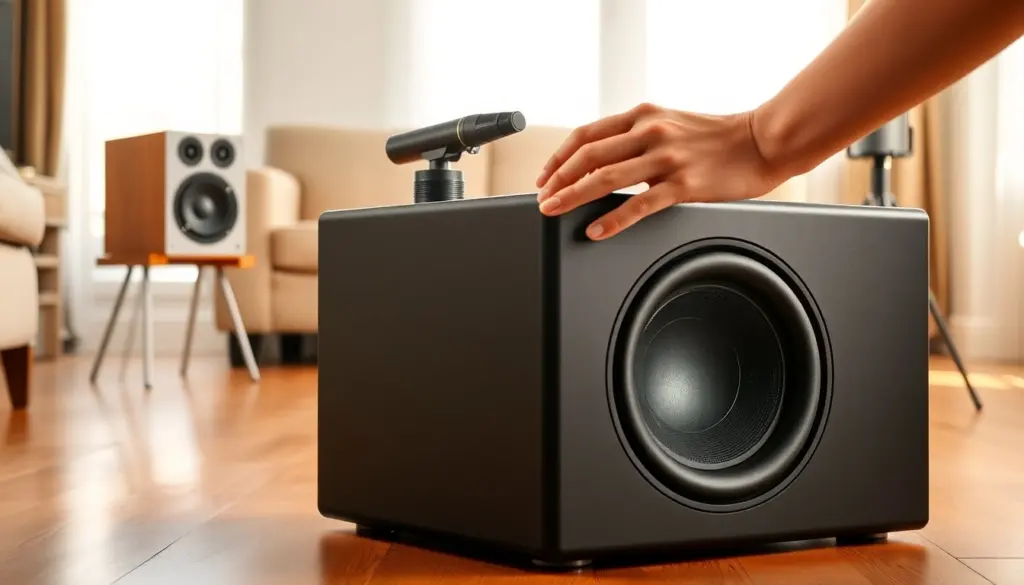
When someone asks which driver to buy for better low end, the quick answer is: a woofer handles mid-to-low bass, while a subwoofer extends the deepest, room-shaking frequencies. The choice depends on music, movies, room size, and how much low-frequency extension they want. Below are quick facts, then a practical look at design, use cases, and how to buy, install, and tune each option.
Key Takeaways
- A woofer handles mid-to-low bass frequencies (40–2,000 Hz) providing balanced sound, while a subwoofer extends the deepest bass (20–120 Hz) with powerful, room-shaking impact.
- Choose a woofer-centric setup for clear, balanced music reproduction and tight soundstage, and a subwoofer when deep extension and impactful low frequencies are priorities.
- Match subwoofer size and power to your room size for optimal bass performance: smaller subs for small rooms and larger ones for bigger spaces.
- Proper placement near walls or corners, correct crossover settings (80–120 Hz), and phase alignment are critical for seamless woofer and subwoofer integration.
- Avoid common mistakes like overpowering the room with an oversized subwoofer, setting too high a crossover frequency, and neglecting phase/time alignment to ensure clean, cohesive bass.
- Adding a subwoofer with correct crossover and level settings reduces distortion and strain on woofers, enhancing overall sound quality without damage.
How Woofers And Subwoofers Work: Design, Frequency Range, And Performance
How Woofers And Subwoofers Work: Design, Frequency Range, And Performance
Quick Facts
- Woofers typically cover roughly 40–2,000 Hz, depending on design.
- Subwoofers focus on 20–120 Hz to reproduce the lowest bass.
- Enclosure, driver size, and amplifier power strongly affect output and clarity.
A woofer is a full-range low-frequency driver built into speakers to handle bass and lower midrange. It combines cone size, suspension, and a motor (voice coil and magnet) to move air. Smaller woofers (5–6.5 inches) can produce tight bass at moderate levels: larger woofers (8–12 inches) move more air and yield greater low-frequency output before distortion.
A subwoofer is a specialized driver and enclosure optimized for the lowest octaves. It often uses larger cones (8–18 inches), more robust motors, and a dedicated amplifier. Subwoofers can be sealed for tight, accurate bass or ported for higher efficiency and deeper extension. They rely on crossover settings to hand off frequencies above their range to woofers or midrange drivers.
Performance differences come from design priorities: woofers prioritize integration and balanced tonal response across the lower spectrum, while subwoofers prioritize extension and output below ~120 Hz. Frequency response charts, distortion figures, and sensitivity ratings reveal how each will behave in a system, but room interaction often dominates perceived bass performance.
Practical Differences And Use Cases: What Each Driver Handles And When To Choose It
Practical Differences And Use Cases: What Each Driver Handles And When To Choose It
For small to medium rooms where listeners want clear, balanced sound without overpowering low end, woofers built into bookshelf or tower speakers will usually suffice. They reproduce bass lines, kick drums, and the warmth in voices, everything that sits above the deepest sub-bass. A two-channel music lover who values imaging and stereo coherence often prefers relying on well-tuned speakers with competent woofers.
A subwoofer becomes necessary when content demands physical low-frequency impact, home theater explosions, organ pedals, electronic dance music, and cinematic rumble. Movie enthusiasts and gamers who want visceral LF (low frequency) energy will pair one or more subwoofers with front speakers to add depth without forcing the main speakers into distortion.
Use cases by listener type:
- Audiophile music listener: high-quality woofers inside full-range speakers, possibly with a small subwoofer for enhanced extension.
- Home theater: one or two subwoofers sized for the room (10–15 inches typical) to ensure even, powerful bass.
- Small apartment: compact woofers or a small sealed subwoofer to control bass without neighbor complaints.
In short, choose a woofer-centric setup for balanced music reproduction and tight soundstage: choose a subwoofer when the priority is extension, impact, and low-frequency presence that main speakers cannot deliver cleanly.
Buying, Installing, And Tuning: Size, Power, Placement, And Common Mistakes To Avoid
Buying, Installing, And Tuning: Size, Power, Placement, And Common Mistakes To Avoid
Selecting size and power
- Match subwoofer size to room volume: 8–10 inches for small rooms, 10–15 inches for medium, and larger if the room is very big.
- Check amplifier power and sensitivity: more power helps control the cone and reduces distortion at high SPLs.
Placement and integration
- Place the subwoofer near a wall or corner to increase output, but avoid corners if the bass becomes boomy.
- Use the speaker/sub crossover (typically 80–120 Hz) to hand off low frequencies smoothly, set the crossover roughly where the main speakers’ response begins to fall off.
- Phase alignment matters: adjust the sub phase or use an audio delay to keep the sub and woofers in sync at the listening position.
Tuning tips
- Use room correction (EQ) sparingly to tame peaks: it can flatten response but may hide time alignment issues.
- Sweep test tones or measurement apps help find nulls and peaks, move the sub a few feet to minimize room modes rather than relying only on EQ.
Common mistakes to avoid
- Overpowering the room: choosing an oversized sub without considering room acoustics leads to uneven bass.
- High crossover frequency: setting the sub crossover too high causes localization of low frequencies and blurs imaging.
- Neglecting phase/time alignment: poor integration makes the bass sound disconnected even if levels are correct.
For most buyers, a measured approach, choosing a subwoofer sized for the room, setting a conservative crossover, and spending time on placement and phase, yields the best result. A well-integrated sub provides deep extension while leaving tonal balance and imaging to the main speakers.
Frequently Asked Questions
Q: Will adding a subwoofer damage my speakers?
A: No, if the crossover and levels are set correctly, the sub relieves woofers of very-low duties and can reduce distortion and strain.
Q: How many subwoofers are ideal?
A: One is fine for small rooms: two or more help even out room modes in larger spaces.
Q: Can a small woofer sound as good as a large sub?
A: Small woofers can sound tight and musical, but they won’t match a properly powered subwoofer’s deep extension or output in the lowest octaves.
Woofer vs Subwoofer: Frequently Asked Questions
What is the main difference between a woofer and a subwoofer?
A woofer handles mid-to-low bass frequencies roughly from 40 to 2,000 Hz, while a subwoofer focuses on the lowest bass frequencies from about 20 to 120 Hz, providing deeper, room-shaking bass extension.
When should I choose a subwoofer over a woofer?
Choose a subwoofer for home theater, electronic music, gaming, or cinematic experiences where deep low-frequency impact and extension below 120 Hz are essential. Woofers suffice for balanced music listening in smaller rooms without overpowering bass.
How does room size affect the choice of a subwoofer?
Match subwoofer size to your room: smaller rooms suit 8–10 inch subwoofers, medium rooms 10–15 inches, and larger rooms may require even bigger subs for balanced and powerful bass output.
Can adding a subwoofer damage my existing speakers?
No, adding a subwoofer properly set with correct crossover and levels actually reduces strain on your speakers by handling the very low frequencies, which can lower distortion and improve overall sound quality.
How do I correctly integrate a subwoofer with my main speakers?
Place the subwoofer near a wall but avoid corners if bass sounds boomy. Set the crossover frequency around 80–120 Hz where your main speakers’ bass response declines, and adjust phase alignment to keep the sub and woofers in sync for seamless bass integration.
Can a small woofer produce bass as good as a large subwoofer?
While small woofers (5–6.5 inches) can deliver tight, musical bass at moderate levels, they cannot match the deep bass extension or high output capability that a properly powered large subwoofer offers in the lowest frequency range.

Leave a Reply