

| Decision point | Passive speakers | Powered speakers | Planning use |
|---|---|---|---|
| Amplification | No built-in amp. They need an external amp or AV receiver to power the signal. | Built-in amplifier, so no external amp is needed for power. | Count the amplifier as part of a passive system’s cost and rack space. |
| Setup effort | Typically a wired connection and a more complex setup process. | Much easier: plug in an audio device and no other components are needed. | Choose powered if you want music playing quickly with few decisions. |
| Amp upgrades | The amplifier can be upgraded, or a component added, without buying new speakers. | The built-in amp cannot be replaced with a more powerful model. | Passive suits anyone who expects to change the amp later. |
| Speaker cable | Speaker cable runs from the amp to each speaker. | No long speaker cable from an amp to the speaker. | Think about cable routes and placement before buying passive. |
The table draws on Sonos’s guide to active and passive speakers and Soundcore’s powered-versus-passive comparison.
Passive vs powered speakers comes down to where the amplifier lives: passive models need an external amp or AV receiver, while powered models build one in, so choose powered for simplicity and small spaces and passive for upgradeability.
Listeners who also use headphones can compare the best headphones for music alongside their speaker plans, since the same room and budget limits often apply to both.
What the choice changes in practice
The amplifier decision shapes your room layout, your total spend and how much tinkering you must do. A powered speaker folds those decisions into one box. A passive speaker spreads them across several components that you choose and connect yourself.
Small rooms and limited space
Powered speakers suit small rooms because they remove the separate amplifier from the equation. ELAC says active speakers make sense for people who listen to digital music, particularly in high-resolution formats, and have limited space. A desk, a shelf or a compact living area has no room for a receiver and a tangle of cable, and a powered pair avoids both.
Room fit is also about the speaker itself. Gemini Sound advises picking the driver size to match your room. That applies to either type, so settle the size first and the amplification question second.
Budget and total cost
Passive speakers can look cheaper on the shelf, but the comparison only holds when you count everything. Gemini Sound tells passive buyers to budget for the speakers plus an amplifier and speaker cable rated for the length of the cable runs. A powered pair already contains its amplification, so the price on the box is closer to the real total.
ELAC points the other way for some buyers: consider passive if your budget is more constrained, or if you are thinking of upgrading your amplifier later. That fits a buyer who already owns a suitable amp or receiver, because the speakers are then the only new purchase.
Skill and willingness to tinker
Setup skill is where the two types differ most. Soundcore calls active speakers much easier to set up than passive ones, since you only plug in an audio device. Passive setups ask more of you. Gemini Sound’s advice is to match the amp to the speaker’s RMS rating and impedance, and you need to know where to find those figures before you buy.
- Choose powered if you want a system that works as soon as it is connected, with no pairing homework.
- Choose passive if you enjoy assembling a system and are comfortable checking ratings before you buy.
- Hold off on passive if you have no amp or receiver yet and no appetite to research one, because the speakers cannot play without it.
Wiring and setup
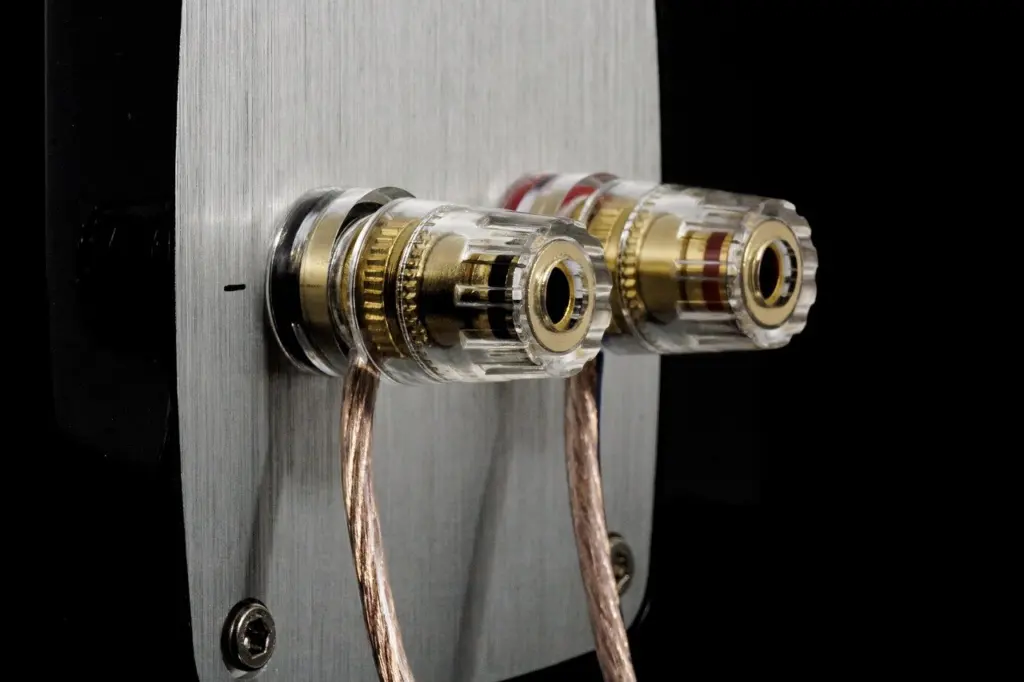
The wiring difference follows directly from where the amplifier sits. A passive speaker is a cabinet with drivers and no power stage, so everything it plays arrives over speaker wire from an amp.
Passive: speaker cable and matching
ELAC explains that passive speakers need speaker cables to carry the sound from the amplifier to the speakers. They only require a speaker wire connection and no additional power cables, which keeps the speaker end tidy. The work moves to the amp end and the cable run.
Two details matter. First, Sonos says a passive speaker must be paired with an amp whose power output matches the speakers’ impedance. Second, Gemini Sound recommends keeping cable runs properly gauged so you do not lose power over distance. If your speakers will sit far from the amp, treat cable gauge as part of the purchase, not an afterthought.
Powered: short internal cables
Sonos notes that active speakers do not require long speaker cables leading from the amp to the speaker. The amplification happens inside the cabinet, so the only external connections are the signal source and mains power. That is why a powered speaker works well when you cannot hide a long cable run, though it does need to sit near a power outlet.
Amplifier, crossover and driver protection
Inside the box, the difference is whether the amplifier and the speaker were designed as one unit or chosen separately. That determines who does the matching work and how much protection is built in.
Matching done at the factory
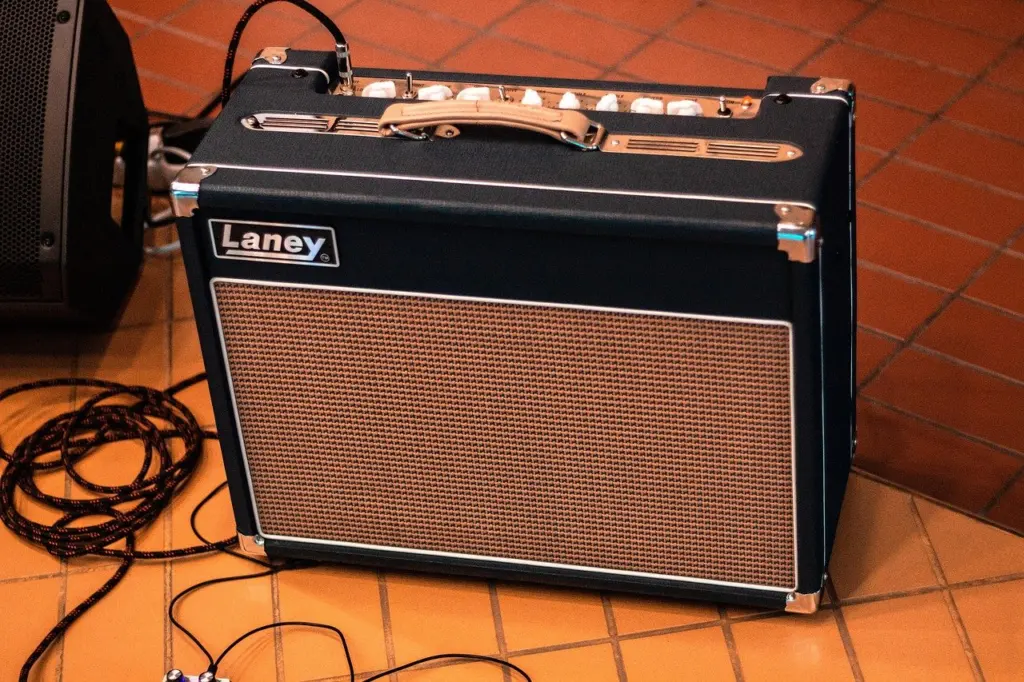
In a powered speaker, Sonos says the built-in amp is already matched to the speaker’s drivers. Gemini Sound adds that the drivers, amp and tuning are matched at the factory. You are not checking impedance or power ratings yourself because the manufacturer has already settled them.
ELAC shows how far this can go. Each Navis bookshelf speaker has three amplifiers for a total amplifier power of 300 watts. That is a design choice specific to that product, but it illustrates that a powered speaker can dedicate amplification to the drivers inside it in ways a single external amp channel does not.
Crossovers in a passive chain
With passive speakers, more of the system design sits with you. Gemini Sound describes it this way: you set the tuning and crossover in your rack, controlling every part of the chain, and you can swap or scale each part independently. That freedom is valuable if you know what you want. It also means a poorly chosen amp can spoil an otherwise good speaker.
Why powered speakers protect drivers
Powered speakers protect their drivers because the amp, the drivers and the tuning are designed together. Gemini Sound points out that built-in level controls and limiters make it harder to accidentally cook a driver. A passive speaker has no such guard unless your amp or processor supplies one, and a mismatched or overdriven amp can damage it.
Soundcore also states that a built-in amp can help reduce distortion and noise. That is a manufacturer claim, so treat it as a design intent rather than a measured guarantee, and trust your ears when you audition a pair.
Upgrades and when passive still wins
Upgradeability is the strongest argument for passive speakers. Soundcore says you can upgrade the amplifier or add a component without needing to buy new speakers, and Sonos makes the same point about moving to a higher-quality amp later. Gemini Sound’s version is that each link in the chain can be swapped or scaled on its own. Speakers often outlast the electronics driving them, so this suits long-term planners.
The same quality is the weakness of powered speakers. Soundcore notes that the amplifier cannot be replaced with a more powerful model. If the sound you want changes, you replace the speakers.
Passive also wins in larger installations. Gemini Sound says passive gets cost-effective when you run many cabinets off shared amplification, and Soundcore says passive speakers work better in a club where the sound system can be powered by a rack of amplifiers. A single rack feeding many speakers is easier to manage than a mains connection and amp at every cabinet.
- Many speakers, one amp rack: passive keeps the electronics in one place.
- Evolving system: passive lets you replace the amp, DAC or processor without touching the speakers.
- Fixed, compact system: powered avoids both the upgrade cycle and the extra boxes.
Your sources and room matter too. Headphone users deciding between sealed and open designs can read Open vs Closed Headphones: How To Choose The Right Style For Listening, Mixing, And Gaming (2026 Guide) – Soniqcast, and vinyl listeners feeding a passive system can look at How To Clean Vinyl Records At Home: A Simple 7-Step Guide For Better Sound In 2026 – Soniqcast for record care.
Frequently asked questions
What is the difference between passive and powered speakers?
A powered speaker contains its own amplifier, while a passive speaker has none and cannot amplify the signal. Passive models depend on an external amp or AV receiver to work.
Which suits small rooms better?
Powered speakers, generally. They need no separate amplifier, which helps when space is limited, and ELAC links them to digital music listening in small setups.
Can I upgrade the amplifier in a powered speaker?
No. The built-in amp cannot be swapped for a more powerful one, so improving the sound means changing the speakers. Passive systems let you change the amp alone.
What must the amp match on a passive speaker?
Gemini Sound advises matching the amp to the speaker’s RMS rating and impedance, and Sonos says the amp’s power output must match the speakers’ impedance.



Leave a Reply