
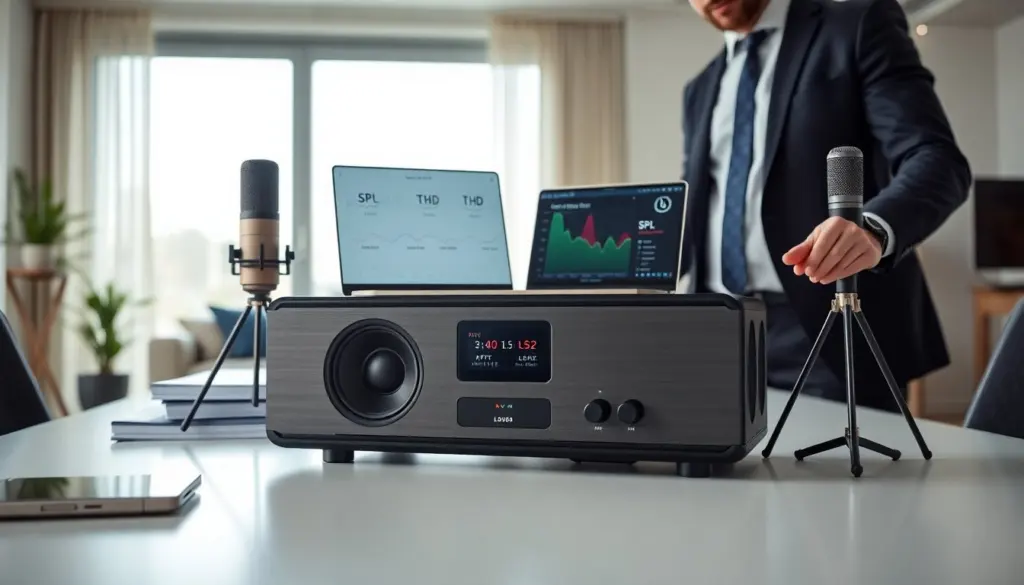
The loudest bluetooth speaker will give listeners the power to fill a room. The article explains how brands report loudness and what numbers mean. The reader will learn which specs drive real volume. The reader will get practical tips to push a speaker safely and keep sound clear. The guide stays direct and factual to help buyers pick the right model.
Key Takeaways
- The loudest bluetooth speaker’s volume is best judged by continuous RMS power and real dB measurements, not just peak ratings.
- Large or multiple drivers combined with proper amplifier power and enclosure design boost loudness while maintaining sound clarity.
- Low Total Harmonic Distortion (THD below 1%) ensures that high volume playback stays clean and distortion-free.
- Using higher-bandwidth Bluetooth codecs like aptX Adaptive or LDAC preserves audio quality at max volume.
- Placing the speaker near walls, elevating it, and updating firmware optimize loudness and sound performance.
- For extended loud listening, use external power and multiple speakers to improve volume and reduce strain on individual units.
How Loudness Is Measured And Why It Matters (dB, RMS, Peak, THD)
Decibels (dB) measure sound pressure. Manufacturers report dB to show loudness. The loudest bluetooth speaker claims high dB ratings. The listener should check how brands measure dB. They often measure at one meter on axis. That distance gives a baseline for comparison.
RMS shows continuous power handling. RMS comes from amplifier and driver limits. RMS gives a realistic sense of sustained volume. The listener will prefer higher RMS for steady loud playback.
Peak power shows short bursts the amplifier can supply. Peak helps with transient energy. Peak does not describe normal listening volume. The buyer should not assume high peak equals sustained loudness.
Total Harmonic Distortion (THD) shows distortion level at a given output. Lower THD gives cleaner sound at high volume. The loudest bluetooth speaker can have poor THD if the design favors raw level over clarity. The reader should look for THD under 1% at practical listening levels for music they like.
SPL (sound pressure level) numbers often pair with dB. SPL tells how loud the speaker plays at a set distance. SPL drops with distance. The buyer should remember that a speaker rated 110 dB at 0.5 m will sound much quieter at 3 m.
Human hearing responds to dB logarithmically. An increase of 10 dB sounds about twice as loud to most people. The buyer should treat small dB gains as meaningful. The loudest bluetooth speaker label can mislead without context on measurement method and distortion levels.
Key Features That Determine How Loud A Bluetooth Speaker Can Get
Driver size affects output. Larger drivers move more air and often produce higher SPL at low frequencies. The loudest bluetooth speaker often uses multiple drivers to cover bass, mids, and highs. Multiple drivers share the load. That setup reduces distortion at high volume.
Amplifier power matters. Higher wattage amplifiers deliver more headroom. The speaker will sound louder with a clean amplifier. Brands sometimes quote combined peak wattage. The buyer should focus on continuous power ratings and real measurements when available.
Enclosure design changes output. Ported enclosures increase bass output at certain frequencies. Sealed designs give tighter bass but lower low-frequency output. The loudest bluetooth speaker may use a ported cabinet or passive radiators to boost low end without extra amplifier power.
Passive radiators increase apparent bass without extra power. The speaker will use them when a brand wants big bass in a small box. They help the loudest bluetooth speaker reach deep levels without port noise.
Battery and power delivery limit sustained loudness in portable models. The speaker will cut power or introduce distortion if the battery drains or the power circuit overheats. The buyer should check battery capacity, rated play time at max volume, and thermal management.
Bluetooth codec choice affects clarity at high volume. Higher-bandwidth codecs like aptX Adaptive or LDAC transmit more audio data. The listener will get cleaner sound at high volume with a good codec and strong connection. The loudest bluetooth speaker must pair codec and hardware to avoid dropouts and compression artifacts.
DSP (digital signal processing) shapes the output. Proper DSP prevents driver overload and reduces clipping. The speaker will sound louder and clearer when DSP limits distortion and balances frequencies. The loudest bluetooth speaker often relies on DSP to reach high levels without harshness.
Practical Tips To Maximize Volume And Sound Quality In Real-World Use
Place the speaker near a wall to increase perceived bass. The wall will reflect low frequencies and add headroom. The listener should avoid corners for too much boom. Corners can cause muddy bass and make the speaker distort sooner.
Raise the speaker off the floor to reduce boundary cancellation. A few inches of elevation often improves clarity and increases SPL at ear level. The user should test height adjustments to find a sweet spot for the room.
Use the correct Bluetooth codec on the source device. The source must support the speaker’s preferred codec. The listener should set the phone or laptop to use aptX Adaptive, LDAC, or AAC when available. That reduces compression and keeps detail at high volume.
Keep firmware updated. Brands release firmware to fix audio issues and improve power delivery. The speaker will perform better and louder with current firmware. The buyer should check updates before major listening sessions.
Avoid maxing equalizer boosts. Large bass or treble boosts push drivers into distortion. The user should apply small EQ changes or use the speaker’s built-in presets. The loudest bluetooth speaker will hold clean sound longer with modest EQ.
Use an external power source for extended loud playback when possible. Plugging the speaker into AC often gives more headroom than battery power. The speaker will maintain stable output and avoid thermal throttling on AC power.
Place multiple speakers in stereo or party mode to increase overall SPL. Two well-placed speakers deliver higher room volume with less strain per unit. The listener will get better dynamics and lower distortion than by driving a single speaker to its limits.
Match music selection to the speaker. Tracks with wide dynamic range and clear mastering respond better to high volume. The listener should avoid heavily compressed tracks that sound harsh when loud.
Leave a Reply