
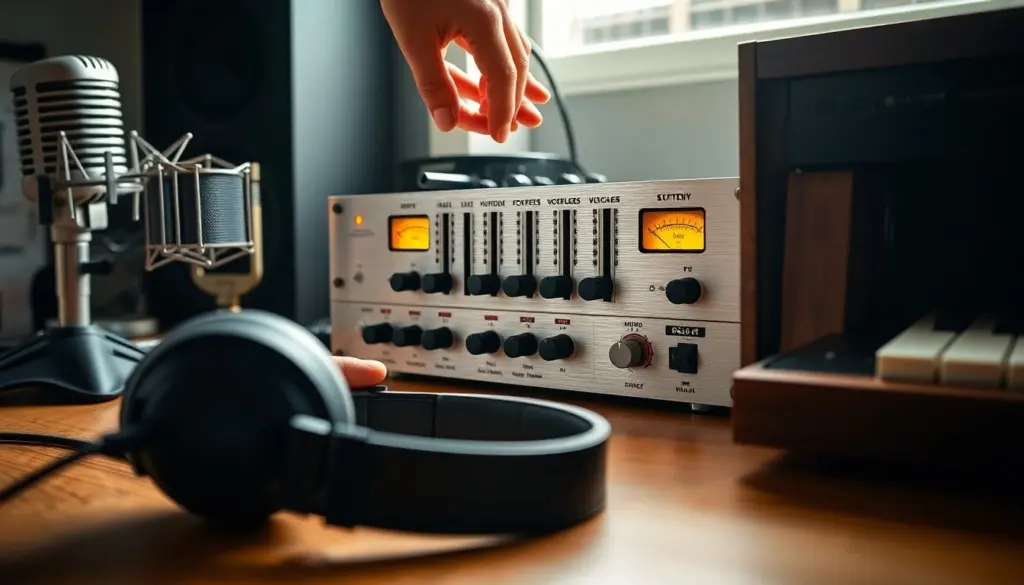
Think of a vocoder as a tool that lets one sound borrow the spectral shape of another, most commonly used to make voices take on the tonal character of synths or instruments. It analyzes the frequency content of a modulator (often a voice) and applies those characteristics to a carrier signal, producing that classic robotic or harmonized vocal effect. The result can be subtle formant shaping or extreme synthetic textures depending on settings and sources.
Key Takeaways
- A vocoder creates robotic or harmonized vocal effects by applying the frequency characteristics of a modulator signal, usually a voice, to a carrier signal like a synthesizer.
- Vocoders split audio into frequency bands and transfer the amplitude envelopes from the modulator to the carrier for precise formant shaping and timbral transformation.
- Choosing the right carrier and modulator sounds is essential for clear and creative vocoder results, with sawtooth synths and clean vocal recordings being optimal choices.
- Hardware vocoders provide tactile analog control and character, while software plugins and modular systems offer flexibility, automation, and precision editing.
- Vocoder effects are versatile and useful beyond novelty robotic voices, including vocal doubling, background harmonies, and unique sound design textures.
- For optimal mix clarity, balance the vocoded signal with some dry vocals, use sidechain compression, and ensure intelligibility by checking the sound in mono.
How a Vocoder Works: The Basics
Quick Facts
- Vocoders separate and map audio into frequency bands using filter banks.
- The modulator provides the envelope info (speech dynamics): the carrier provides timbre.
- Common uses include vocal effects, sound design, and realtime performance.
A vocoder operates by splitting both the modulator and carrier into several frequency bands. The device extracts the amplitude envelope from each band of the modulator and applies those envelopes to the corresponding bands of the carrier. That mapping preserves the timing and articulation of the original source while replacing its timbral content with another. In practice, a higher band count yields clearer intelligibility: fewer bands create a chunkier, more robotic tone. Latency, routing, and filtering choices determine how natural or processed the result sounds.
Key Components and Signal Flow
A typical vocoder’s signal flow includes input stage, filter bank, envelope followers, gain mapping, and output summing. The modulator input (usually a mic) feeds the envelope followers, which detect amplitude changes in each band. The carrier input (a synth, pad, or noise) is run through the same filter bank: each band’s level is then shaped by the modulator’s envelope. Additional stages often include pre-emphasis EQ, band smoothing, pitch tracking, and post-processing like reverb or compression. Routing options, parallel vs. serial, change whether the original voice remains audible alongside the vocoded result.
Carrier Vs. Modulator: Choosing Sounds
Choosing the right carrier and modulator is the creative heart of vocoding. For intelligible vocals, a bright, harmonically rich carrier, such as sawtooth synths, layered pads, or detuned analog voices, works well because it supplies harmonic content across bands. For more ethereal textures, filtered noise or long evolving pads are effective. As for modulators, clear, well-recorded speech or sung vowels with minimal sibilance perform best: aggressive consonants can be emphasized with transient shaping or a parallel dry blend. Experiment with key tracking or pitch-shifted carriers to create choir-like or formant-shifted effects.
Popular Vocoder Types and Platforms
Vocoder options range from classic hardware units to modern plugins and modular modules. Analog hardware, like vintage rack units, offers characterful filter responses and hands-on control. Dedicated digital hardware (standalone or embedded in synths) adds flexibility and lower noise. On the software side, DAW plugins provide editable filter counts, sidechain routing, and automation. Modular ecosystems (Eurorack) supply band-pass modules, envelope followers, and VCAs for fully custom vocoder builds. Many producers mix and match: a hardware front end for texture, then software for precision editing and recall.
Hardware, Software, and Modular Options
Hardware units give tactile control and often impart pleasing analog coloration: they’re useful on stages where hands-on tweaks matter. Software plugins are the most common choice in studios for their recall, presets, and lower cost, examples include multi-band vocoders with sidechain routing and MIDI control. Modular setups appeal to sound designers who want to patch unique signal paths and CV control over bands. When choosing a platform, weigh portability, latency, and whether real-time performance or precise automation is the priority.
Practical Uses and Creative Techniques
Vocoder use stretches beyond novelty robot voices. It’s a tool for vocal doubling, formant shaping, textured background harmonies, and percussive gating. Producers use it to blend vocals into synth beds, to create spoken-word pads, or to fabricate chorus-like ensembles via pitch-shifted carriers. Sound designers apply vocoders to Foley or field recordings to produce alien voices or rhythmic textures. For transparent results, reduce band count and mix in dry signal: for extreme sound design, add distortion, bit reduction, and heavy filtering to the carrier before vocoding.
Tips for Mixing, Automation, and Performance
Balance is key: use a blend control to keep some dry vocal for clarity. Sidechain-compress the carrier to follow modulator dynamics more tightly, and automate band emphasis to highlight consonants or vowels at key moments. In performance, map filter bands or wet/dry mix to controllers for expressive changes: sync LFOs to tempo for rhythmic movement. EQ the carrier to avoid frequency clutter and apply light compression after vocoding to glue the bands. Finally, always listen for intelligibility in a mono mix, vocoders can lose clarity when panned oddly.
FAQ
How many bands should a vocoder have for clear vocals?
Generally, 16 to 32 bands provide good intelligibility for vocals: fewer bands create a more robotic sound.
Can a vocoder work without a microphone?
Yes, using a pre-recorded voice or another audio track as the modulator works fine: MIDI-controlled carriers can also replace live inputs.
Is a vocoder the same as a talkbox?
No. A talkbox routes carrier sound through a tube into the performer’s mouth for natural articulation, while a vocoder digitally maps spectral envelopes between signals.
Will a vocoder ruin a good vocal take?
No, used sparingly, it enhances texture: keep a dry backup track so the original performance remains available.
Frequently Asked Questions About Vocoders
What is a vocoder and how does it work?
A vocoder is an audio tool that applies the frequency characteristics of one sound, usually a voice (modulator), to another sound, like a synth (carrier), creating robotic or harmonized vocal effects by mapping amplitude envelopes across frequency bands.
What is the difference between the modulator and carrier in a vocoder?
The modulator provides speech dynamics and articulation, typically a vocal input, while the carrier supplies the harmonic timbre, such as a synth or noise, which shapes the final vocoded sound.
How many frequency bands does a vocoder need for clear vocal effects?
Using about 16 to 32 frequency bands typically yields good intelligibility in vocoded vocals; fewer bands produce more robotic, less clear sounds.
Can a vocoder be used without a microphone?
Yes, vocoders can use pre-recorded audio or other tracks as modulators, and MIDI-controlled carriers can replace live inputs, so a microphone isn’t always necessary.
Is a vocoder the same as a talkbox?
No, unlike a vocoder that digitally maps spectral envelopes between two signals, a talkbox routes sound through a tube into the mouth to produce natural articulation effects.
What are common creative uses of vocoders beyond robotic voice effects?
Vocoder effects include vocal doubling, formant shaping, creating textured harmonies, spoken-word pads, and sound design for alien voices or rhythmic textures by blending vocals with synths or field recordings.
Leave a Reply