
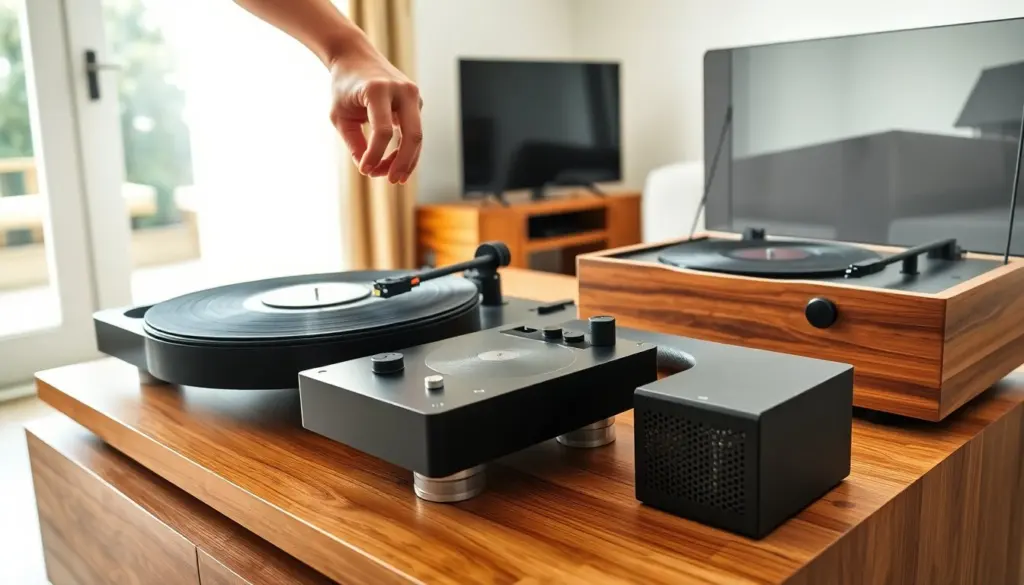
If choosing between a turntable and a record player, the turntable generally delivers better sound and upgrade potential while a record player prioritizes ease and built‑in convenience. This article compares what changes, from parts that matter to connectivity and long‑term value, so a buyer can pick the right path.
Quick Facts
- Turntables usually offer better fidelity and upgradeability.
- Record players bundle speakers and a preamp for plug‑and‑play use.
- Maintenance and repairability favor separate component systems over integrated players.
Key Takeaways
- Turntables offer superior sound quality and upgrade potential compared to record players, making them ideal for audiophiles and collectors.
- Record players provide convenience with built-in speakers and preamps, suited for casual listeners and those seeking easy, plug‑and‑play use.
- Key components like tonearm quality, cartridge type, and platter stability largely determine the performance difference between turntables and record players.
- Turntables are more repairable and long-lasting due to replaceable parts, while record players often have limited service options, affecting sustainability and resale value.
- Choose a record player for ease and features like Bluetooth or USB ripping, but select a turntable if you want better fidelity and the ability to customize your setup.
- Investing in a modular turntable system may cost more initially but delivers longer-term value through sound improvement and upgradeability.
Side‑By‑Side: What Really Differs Between A Turntable And A Record Player
A turntable is typically a component designed for audio systems: its focus is precise speed control, a quality tonearm and the ability to accept upgrade cartridges and external preamps. A record player (often called an all‑in‑one or receiver with a phono input) combines a platter with a built‑in preamp and speakers, aiming at convenience rather than maximal fidelity.
Sound and flexibility split the two. Turntables connect to dedicated amps or active speakers and let listeners fine‑tune cartridges, phono stages, and isolation. Record players come ready to play from the box, which suits casual listeners but limits upgrades. In short: turntables for enthusiasts, record players for easy listening and limited budgets.
Key Components That Define Performance
Selecting between the two often comes down to understanding which parts drive performance. Below are the components that most affect sound, durability, and resale value.
Tonearm, Cartridge, And Stylus: Why Parts Matter
The tonearm’s geometry and the cartridge/stylus design control tracking accuracy and detail retrieval. A high‑quality moving‑magnet or moving‑coil cartridge paired with a well‑damped tonearm reduces distortion and surface noise. All‑in‑ones usually ship with a basic cartridge that will sound acceptable but lacks refinement and upgrade paths.
Motor, Platter, And Speed Control: Stability And Precision
Motor type (belt vs direct drive), platter mass, and speed control determine wow and flutter and bass response. Belt‑drive turntables often isolate motor noise better, while heavy platters stabilize rotation. Built‑in record players sometimes use cheaper motors or electronic speed control that sacrifices long‑term stability and tweakability.
Preamp, Outputs, And Built‑In Speakers: Connectivity Tradeoffs
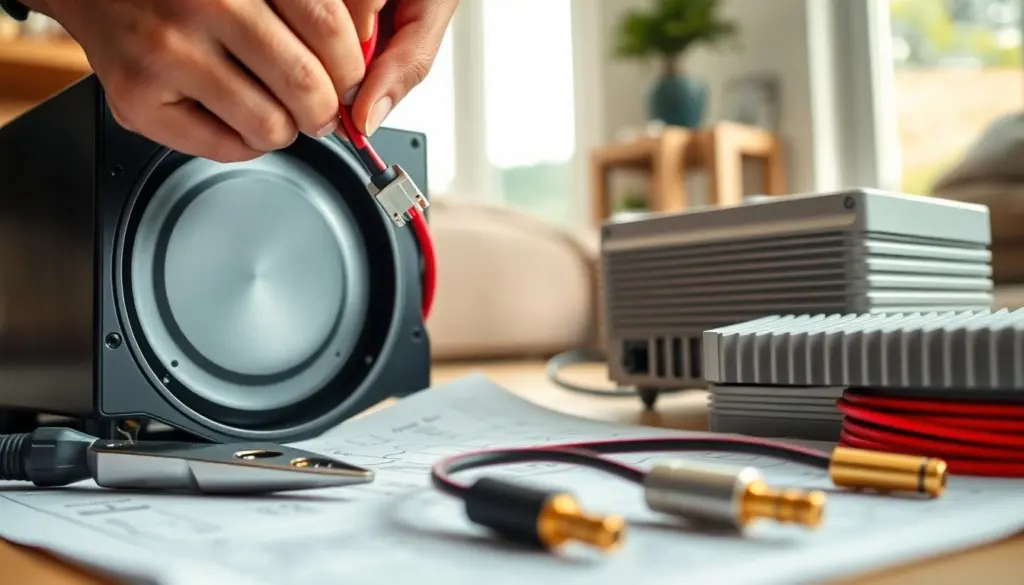
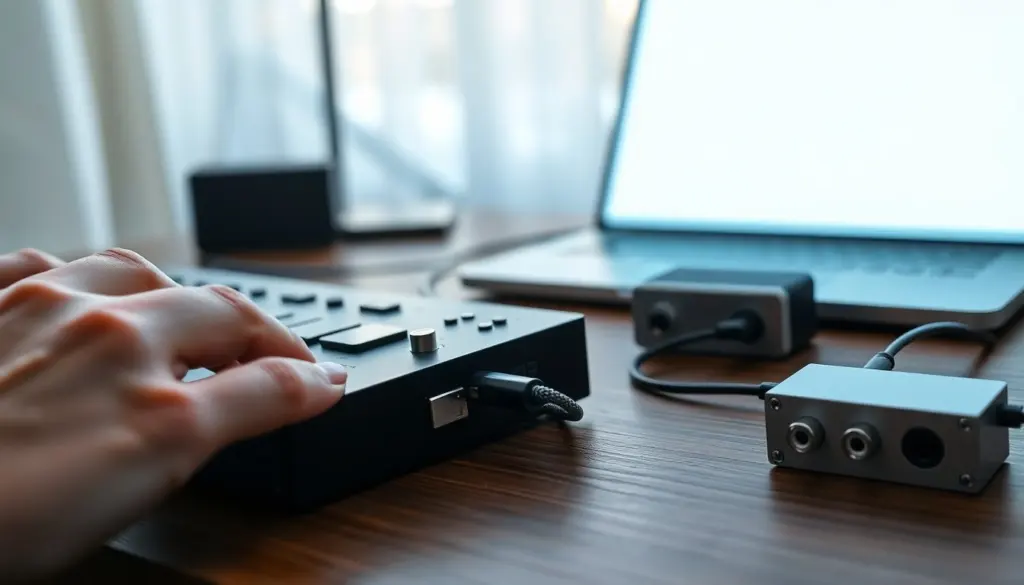
Integrated preamps and speakers make record players simple: connect and play. But these components are usually optimized for cost, not transparency. A dedicated turntable with an external phono preamp and separate amplification allows cleaner gain staging and superior analog tone. For people who want Bluetooth or USB ripping, many record players include these features: standalone turntables can add them via external boxes.
Sound Quality, Longevity, And Repairability Compared
On sound, a modular turntable system outperforms most record players because each part can be upgraded: cartridge, phono stage, platter isolation, and tonearm bearings all influence realism and dynamics. Record players can surprise at midrange clarity on higher‑end models, but they rarely reach the same depth or channel separation.
Longevity favors serviceable components. Turntables with removable cartridges and standard motors are easier to repair or improve, increasing lifespan and resale value. Record players with glued‑in speakers or proprietary preamps can be harder or uneconomic to fix: when they fail, replacement often means buying new.
Repairability matters if the buyer values sustainability or collecting. For casual listeners who expect to replace an inexpensive all‑in‑one after a few years, the convenience tradeoff might be acceptable.
Which Should You Buy? Practical Recommendations By Use Case
For newcomers who want simplicity and don’t plan upgrades: choose a record player with a decent built‑in preamp and the option to turn it off (so an external phono stage can be added later). Look for models with user‑replaceable cartridges and at least line‑out options.
For listeners who value fidelity, vinyl collectors, and people who enjoy tweaking gear: buy a separate turntable. Prioritize a stable platter, a well‑engineered tonearm, and a replaceable cartridge. Budget for a quality phono preamp and stands or isolation pads.
For apartment dwellers and casual streamers: consider a compact record player with Bluetooth or USB ripping for convenience, but keep expectations modest for bass and stereo imaging.
For audiophiles on a budget: a used entry‑level turntable plus a modest phono stage will usually outperform any similarly priced all‑in‑one. If portability and low fuss are the goal, an all‑in‑one record player remains the sensible choice.
Buy with future options in mind: a small up‑front premium for a modular setup often pays back in longer use and better sound.
Turntable vs Record Player – Frequently Asked Questions
What is the main difference between a turntable and a record player?
A turntable focuses on high-fidelity sound and upgrade options, requiring external amps and speakers, while a record player combines a platter with built-in preamp and speakers prioritizing ease of use and convenience.
Why do turntables generally offer better sound quality than record players?
Turntables allow for precise speed control, replaceable cartridges, and external preamps, which reduce distortion and surface noise, resulting in superior sound fidelity compared to the more basic components in record players.
Can I upgrade the components on a record player like I can on a turntable?
Most record players have limited upgrade options because they typically use integrated preamps and built-in speakers, whereas turntables feature modular parts like tonearms and cartridges that can be easily replaced or enhanced.
Which option is better for someone new to vinyl and looking for simple setup?
Casual listeners new to vinyl should choose a record player with a built-in preamp and speakers for plug-and-play convenience, preferably with a user-replaceable cartridge and line-out options for future upgrades.
How does maintenance and repairability compare between turntables and record players?
Turntables are easier to maintain and repair due to removable cartridges and standard motors, increasing lifespan and resale value. Record players often have glued-in components, making repairs difficult or uneconomical.
Are there record players with Bluetooth or USB features for streaming and digital copying?
Yes, many modern record players include Bluetooth connectivity and USB ripping capabilities for convenience, although standalone turntables can also add these features with external adapters.

Leave a Reply