
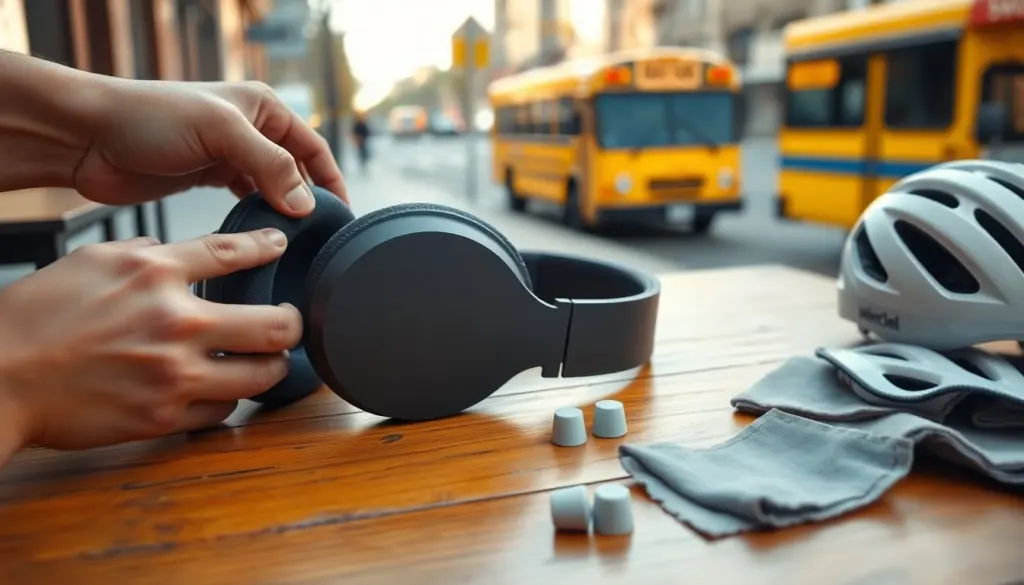
They are generally safe for most people when used responsibly, but noise-cancelling headphones carry trade-offs that matter for hearing, awareness, and comfort. This article explains how active and passive cancellation work, the main risks to watch for, who should be cautious, and practical steps to reduce harm while enjoying quieter listening.
Quick Facts:
- Active noise cancellation (ANC) uses anti-noise circuitry: passive cancellation relies on physical sealing.
- Prolonged loud listening, not ANC itself, is the primary hearing risk.
- ANC can reduce situational awareness, especially in traffic and industrial settings.
- Proper volume, fit, and taking breaks substantially lower safety concerns.
Key Takeaways
- Noise cancelling headphones are generally safe when used responsibly, with the main hearing risk being prolonged loud listening rather than the noise cancellation itself.
- Active noise cancellation (ANC) effectively reduces low-frequency background noise, enabling lower playback volumes and reducing listening fatigue.
- ANC and passive noise isolation can reduce situational awareness, so users should avoid wearing them near traffic or hazardous work environments without caution.
- Children, people with ear or balance disorders, and workers in safety-critical jobs should use noise cancelling headphones carefully or consult a healthcare professional.
- To maximize safety, keep volume moderate, take regular listening breaks, ensure proper fit, and use ambient or transparency modes when situational awareness is important.
- Over-ear ANC headphones typically encourage safer listening habits and are preferable in public spaces, while device volume limits and exposure tracking help protect hearing health.
How Active And Passive Noise Cancellation Work — And Why It Matters For Safety
Active noise cancellation (ANC) creates sound waves that are the exact opposite (phase-inverted) of incoming low-frequency noise: tiny mics pick up ambient sound and the headphone electronics generate the cancelling waveform. Passive noise isolation comes from physical design: thick ear cushions, in-ear tips, or closed-back cups that block sound mechanically. Both approaches lower perceived volume, but they do it differently, and that affects safety.
Why it matters for safety: ANC is very effective at reducing steady, low-frequency sounds such as engine rumble and airplane cabin noise, which can let listeners keep playback at lower overall volumes and reduce listening fatigue. But because ANC lowers background cues (footsteps, horns, announcements), it can impair situational awareness in certain environments. Passive isolation often blocks a broader range of frequencies if the seal is excellent, which can also remove important auditory warnings.
Key technical points:
- ANC targets low-frequency noise: it’s less effective on sudden, high-frequency sounds.
- Passive isolation attenuates across frequencies depending on fit and materials.
- Combining ANC and passive isolation gives the greatest noise reduction but also the greatest potential to mask environmental sounds.
Understanding these differences helps users choose the right technology for where they’ll wear headphones and what safety precautions they’ll need to take.
Potential Risks: Hearing Health, Situational Awareness, And Comfort
Hearing health: The main hearing risk is listening at high volumes for long periods. ANC can indirectly protect hearing by enabling lower playback levels in noisy places, but users who turn volume up to compensate for perceived muffling still risk noise-induced hearing loss. Exposure duration and decibel level matter far more than whether ANC is on.
Situational awareness: Reduced awareness is the clearest safety trade-off. When ANC or tight passive isolation blocks ambient sound, the user may miss vehicle horns, public-address announcements, or approaching people. This risk is greater outdoors (streets, bike lanes) and in workplaces with moving machinery.
Comfort and ear health: Poorly fitting ear cups or ear tips can cause pressure, warmth, or ear canal irritation. Some people report a sensation of pressure or mild dizziness with ANC, likely from the brain processing altered low-frequency cues. These effects are usually temporary but can be uncomfortable.
Other considerations:
- Ear infections are not caused by ANC itself, but unsanitary or ill-fitting earbuds can increase risk if they trap moisture.
- Users with single-sided hearing loss or balance disorders may notice larger effects on spatial perception.
Overall, the risks are manageable with sensible volume control, situational adjustments, and attention to fit and hygiene.
Who Should Be Cautious — Age, Medical Conditions, And Work Environments
Children and teenagers: Young ears are more vulnerable to long-term damage from high-volume listening because they may listen longer and be less aware of warning signs. Parents should enforce volume limits and favor over-ear models with ANC that encourage lower playback rather than tiny earbuds that sit deep in the canal.
People with medical conditions: Those with middle-ear problems, recent ear surgery, chronic ear infections, or vestibular (balance) disorders should consult a clinician before using ANC regularly. The slight pressure sensation some users feel could aggravate existing conditions.
Workers in hazardous environments: Anyone operating vehicles, heavy machinery, or working on roads should avoid technologies that remove critical ambient sounds. Many workplaces require use of certified hearing protection rather than consumer ANC, because safety communication and alarm audibility are essential. In industrial settings, permit the use of specialized electronic hearing protection that attenuates harmful noise but preserves speech.
Frequent travelers and commuters: They benefit most from ANC for comfort and lower listening levels, but should stay alert during critical moments (announcements, boarding) by switching modes or pausing listening.
In short, caution is appropriate for young people, certain medical conditions, and safety-critical jobs: most other users can use ANC safely with sensible habits.
Practical Safety Tips: Volume, Fit, Mode Selection, And When To Pause Use
- Keep volume moderate: Aim for under 60–70% of the device’s maximum or follow device decibel warnings. If the environment is quieter with ANC, prefer lower levels.
- Follow the 60/60 rule: Limit listening to 60% volume for no more than 60 minutes before taking a 5–10 minute break to rest ears.
- Choose the right fit: Use memory-foam ear tips or well-padded cups to create a comfortable seal without excessive pressure. Replace tips and clean earpads regularly to avoid irritation.
- Use ambient or transparency modes when needed: Many ANC models include a transparency or ambient pass-through setting that amplifies external sounds. Switch to that mode in busy streets, during boarding, or when situational awareness is required.
- Avoid ANC while cycling or running near traffic: Passive, low-volume listening or bone-conduction alternatives that leave ears open are safer for outdoor movement.
- Watch for discomfort signals: Dizziness, ear pain, or a feeling of pressure are cues to lower volume or stop using ANC and consult a clinician if symptoms persist.
- Prefer over-ear in shared public spaces: Over-ear ANC often encourages lower volume than in-ear models and is easier to remove quickly.
- Use device safety features: Many smartphones and players offer volume caps and exposure tracking, enable them.
Following these practical steps lets users enjoy the benefits of noise cancellation while minimizing hearing and safety risks.
Frequently Asked Questions About Noise Cancelling Headphones Safety
Are noise cancelling headphones safe for hearing health?
Yes, noise cancelling headphones are generally safe when used responsibly. The main hearing risk comes from listening at high volumes for long periods, not from noise cancellation itself. Using moderate volumes and taking breaks helps protect hearing health.
How does active noise cancellation (ANC) affect situational awareness?
ANC reduces background sounds by creating anti-noise waves, which can impair awareness of important cues like traffic or announcements. This makes ANC less safe in environments requiring alertness, such as streets or workplaces with heavy machinery.
What safety precautions can I take when using noise cancelling headphones?
To stay safe, keep volume below 60–70%, follow the 60/60 rule (60% volume for no more than 60 minutes), use proper fitting ear cups, enable transparency mode when needed, and avoid ANC during activities like cycling near traffic.
Who should be cautious about using noise cancelling headphones?
Children, teenagers, people with ear or balance disorders, and individuals working in safety-critical or noisy industrial environments should use caution. Consulting a clinician or opting for specialized hearing protection is recommended for these groups.
Can noise cancelling headphones cause ear infections?
Noise cancelling technology itself doesn’t cause ear infections. However, poorly fitting or unsanitary earbuds can trap moisture, increasing infection risk. Regular cleaning and using properly fitting ear tips help prevent this.
Why might someone feel dizziness or pressure when using ANC headphones?
Some users experience mild dizziness or pressure due to the brain processing altered low-frequency sounds created by ANC. These sensations are usually temporary but indicate it’s best to lower volume, take breaks, or consult a clinician if persistent.
Leave a Reply