
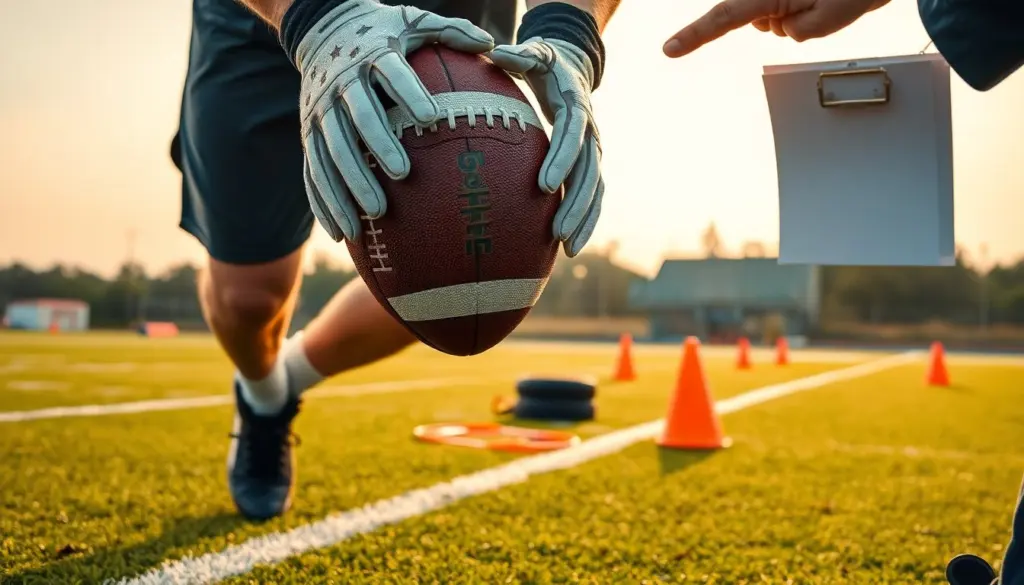
A receiver functions as the primary pass-catching threat and a key space-creator on offense, responsible for winning one-on-one battles and turning targets into yardage. The role blends physical skills, speed, hands, body control, with mental work such as reading coverage and studying film. This guide explains the receiver’s core responsibilities, how they execute routes, catch and run after the catch, and contribute in blocking and preparation.
Key Takeaways
- A receiver’s primary role is to catch passes, create separation through precise route running, and gain yards after the catch to advance the offense.
- Effective route running involves sharp releases, timing, and the ability to adjust routes based on defensive coverage and quarterback cues.
- Catching skills, including soft hands and ball tracking, are crucial for securing the football and maximizing yards after the catch through smart decision-making and body control.
- Receivers contribute to the running game by executing proper blocks, using correct techniques like driving hips and maintaining engagement to sustain running lanes.
- Studying film and understanding defensive coverages enhances a receiver’s game IQ, enabling them to make pre-snap adjustments and exploit defensive weaknesses.
- Versatile receivers adapt their roles based on alignment—outside, slot, or backfield—to stretch the defense both vertically and horizontally.
The Receiver’s Primary Role On Offense
Quick Facts
- Primary job: catch passes and gain yards after the catch.
- Receivers must create separation and convert targets into first downs.
- They help the run game by blocking and influencing defensive alignment.
The receiver’s primary role is to be a reliable target who stretches the defense vertically and horizontally. Depending on scheme and body type, a receiver might line up outside, in the slot, or even in the backfield: each alignment changes responsibilities. Outside receivers often threaten deep routes and contested catches, while slot receivers exploit short-to-intermediate windows and quick-inside space. A receiver’s value is measured by target-to-catch efficiency, yards after catch, and the ability to change the defense’s coverage pre-snap with motion or alignment. Teams ask receivers to be dependable on third down and in two-minute situations, which places a premium on route precision and situational awareness.
Route Running, Releases, And Creating Separation
Route running is the foundation of a receiver’s craft: crisp stems, the right tempo, and an eye for leverage create separation from defenders. Releases off the line vary by defensive look, press requires quick hands and footwork to beat jams, while zone-friendly releases focus on finding soft spots. Receivers use body lean, shoulder fakes, and hip manipulation to change the defender’s momentum.
Timing is critical: routes must land the receiver in the quarterback’s throwing window. The best route runners adjust route depth on the fly based on coverage cues and the quarterback’s drop. Coaches evaluate footwork, route depth consistency, and the ability to sell one move before making another. Common mistakes include telegraphing breaks, slow recovery after a jam, and running identical routes without variation: remedying those mistakes comes from repetition and targeted drills that build muscle memory and anticipation.
Catching, Ball Skills, And After-Catch Play
Catching proficiency separates good receivers from great ones. Reliable hands, soft catches that absorb contact, and the ability to adjust to poorly thrown balls are core competencies. Receivers train hand-eye coordination, catching in traffic, and securing the ball before turning upfield.
After the catch, a receiver’s job shifts to creating extra yards through vision, contact balance, and quick decision-making, choosing whether to bounce outside, cut inside, or lower the shoulder to break tackles. Gap recognition and following blocks from running backs or fullbacks are part of gaining consistent YAC (yards after catch). Coaches value receivers who consistently turn short receptions into meaningful gains by leveraging body control and situational instincts.
Tracking The Ball And Hands Technique
Tracking the ball into the hands starts before the route ends: the receiver watches the quarterback’s release and uses peripheral vision to maintain awareness of defenders. Hands technique includes catching with soft fingers, presenting the body to shield defenders on contested throws, and practicing one-handed grabs for awkward targets. Drills emphasize the catch-to-secure sequence, thumbs together, tuck to the chest, so the ball isn’t juggled on contact.
Blocking, Film Study, And Game IQ
Blocking is often overlooked but critical: receivers must execute blocks that sustain running lanes and prevent defenders from disrupting the play. Effective blocking requires proper angles, hand placement, and willingness to engage larger defenders. Slot receivers commonly execute chip blocks or finish blocks upfield to spring runs.
Film study and game IQ distinguish dependable receivers. They study opponents’ tendencies, how a corner reacts to press, where safeties tilt in certain formations, and how linebackers align versus the slot. That preparation enables pre-snap adjustments and helps receivers identify advantageous matchups.
Blocking Techniques For Receivers And Reading Coverage
For blocking: drive with the hips, keep feet active, strike at the defender’s chest or shoulder pads, and stay engaged through the whistle. For reading coverage: look for two-high safeties, single-high safety, or rotation hints from nickel packages. Recognizing these patterns informs route choices, working the soft spot in a Cover 2, or exploiting mismatch against a linebacker in man coverage. Strong receivers combine physical effort in blocking with a disciplined studying routine that raises their overall play value.
Frequently Asked Questions About What a Receiver Does
What is the primary role of a receiver in football?
A receiver’s primary role is to catch passes and gain yards after the catch by creating separation from defenders and turning targets into first downs.
How does a receiver create separation from defenders?
Receivers use crisp route running, including sharp breaks, quick releases from the line, body leans, shoulder fakes, and hip manipulation to gain an advantage and create separation.
What skills are essential for a receiver to catch passes effectively?
Key skills include reliable hands, soft catches to absorb contact, the ability to adjust to poorly thrown balls, and excellent hand-eye coordination.
How do receivers contribute to blocking on the field?
Receivers block by engaging defenders to sustain running lanes, using proper angles and hand placement, and staying engaged through the whistle to help the run game succeed.
Why is studying film important for a receiver?
Film study improves a receiver’s game IQ by helping them recognize defensive tendencies, read coverage, anticipate pre-snap adjustments, and exploit advantageous matchups.
What techniques do receivers use after catching the ball to gain extra yards?
Receivers use vision, balance, quick decision-making, and the ability to follow blockers or break tackles to maximize yards gained after the catch.

Leave a Reply