
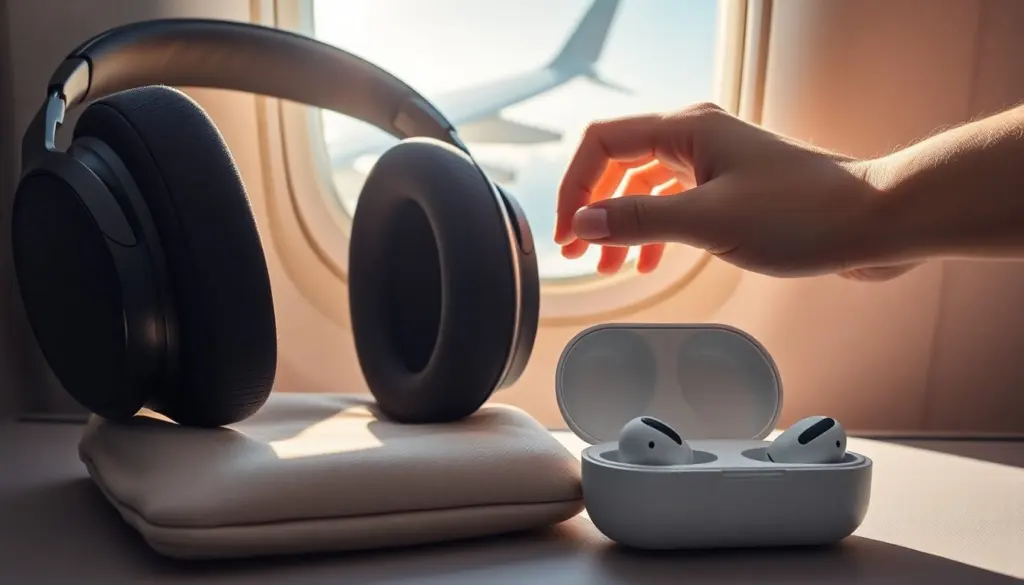
When comparing adaptive vs active noise cancelling, the practical difference is how the system responds to changing sounds: active noise cancelling (ANC) uses fixed-circuit anti-noise to cancel steady background hums, while adaptive noise cancelling adjusts that cancellation dynamically based on the environment. Buyers who need reliable isolation on a plane will value different traits than someone who wants transparent awareness while walking a city street.
Key Takeaways
- Active Noise Cancelling (ANC) uses fixed anti-noise signals to effectively reduce steady, low-frequency sounds like aircraft engines and HVAC systems.
- Adaptive Noise Cancelling (Adaptive NC) dynamically adjusts noise cancellation based on the environment and user behavior, offering better performance in varied, changing soundscapes.
- Choose ANC for consistent, steady noise environments such as long flights, prioritizing models with strong low-frequency attenuation and high battery life.
- Select adaptive NC if you move through diverse environments requiring quick adjustments and situational awareness, like city walking or cycling.
- Proper fit and seal are crucial for effective noise cancellation; even the best ANC systems underperform without good physical isolation.
- Beware of marketing claims—adaptive noise cancelling isn’t always better, especially if your main use is in steady-noise settings where traditional ANC excels.
How Active Noise Cancelling (ANC) Works — The Basics And Performance
Active Noise Cancelling (ANC) uses microphones to pick up external sounds, a digital/analog inverter to create an opposite-phase signal, and speakers that combine that anti-noise with the audio. The effect is strongest on low-frequency, consistent noises, think aircraft engines, HVAC systems, or bus droning. ANC excels at steady hums, reducing perceived volume without changing the music.
How performance varies: manufacturers tune ANC for bandwidth (how many frequencies it targets), latency (how fast anti-noise is generated), and power draw. Over-ear headphones generally host larger circuits and batteries, enabling deeper cancellation: in-ear models rely on passive seal plus ANC to reach similar results. ANC can introduce a slight pressure sensation or processing artifacts with complex transient sounds: listeners sensitive to this often prefer milder ANC settings.
Real-world trade-offs are simple: better ANC usually means heavier hardware and more battery use. Phones and media players can stream high-quality audio while ANC runs, but extended ANC operation reduces runtime. ANC also doesn’t remove sudden, high-frequency sounds (like a nearby shout) as effectively, those are better handled by passive isolation or later software layers.
What Adaptive Noise Cancelling (Adaptive NC) Adds — Smart Adjustment And Real-World Behavior
Adaptive NC builds on ANC by using additional sensors and software to change cancellation behavior on the fly. It analyzes incoming noise profiles, user behavior (headset fit, movement), and sometimes GPS or ambient light data to alter the anti-noise curve or switch modes automatically. The result is less manual fiddling: volume and canceling adapt as the environment shifts from quiet office to loud street.
Typical features include automatic attenuation of sudden noises, more aggressive low-frequency suppression in cabins, and quick relaxation of cancellation when voices or announcements are detected. Adaptive systems commonly use machine learning models trained on diverse soundscapes, so they can prioritize speech intelligibility over raw attenuation when needed.
Limitations: adaptive NC adds complexity and can misclassify sounds, occasionally reducing cancellation when steady noise would have been better suppressed. It also increases firmware update dependence, improvements often arrive via updates rather than hardware changes. Battery impact varies: some adaptive implementations are efficient (using brief analysis bursts), while others run continuous processing that shortens runtime. For someone who moves through varied environments, adaptive NC often provides a noticeably smoother experience, but it’s not always superior for single, unchanging noise conditions.
Choosing Between Adaptive And Active NC: Use Cases, Trade-Offs, And Buying Tips
Deciding between adaptive vs active noise cancelling comes down to context and priorities.
- Commuters and frequent flyers: choose strong ANC if most listening happens on long, consistent-noise journeys. Look for models with high battery capacity and proven low-frequency attenuation.
- Urban walkers and cyclists: pick adaptive NC to preserve situational awareness. Features like quick ambient passthrough and voice detection reduce safety risks.
- Office workers and hybrid users: adaptive NC can toggle between focused cancellation and moderation for nearby speech, useful during hotdesking or meetings.
- Audiophiles and studio use: many prefer ANC tuned to be transparent or even disabled: passive isolation and wired monitoring are often better for critical listening.
Buying tips:
- Prioritize real-world testing or trusted reviews: lab numbers matter, but fit and seal affect perceived performance more than raw spec sheets. If possible, try models with adjustable ANC levels.
- Check battery claims and firmware support: adaptive systems benefit from ongoing software updates: buy brands known for regular improvements.
- Consider multipoint Bluetooth, codec support (aptX/LDAC), and accessory ecosystems, these affect everyday convenience.
- Read notes on pressure or latency artifacts if sensitive to processing side effects: some people prefer hybrid ANC that blends feedforward and feedback mics for smoother response.
Common mistakes to avoid:
- Choosing adaptive solely because it’s marketed as “smarter”: if most listening is on a plane or train, strong fixed ANC often performs better.
- Overlooking fit: even the best ANC is ineffective without a proper seal. Try different ear tips or head adjustments before deciding.
Eventually, the best choice aligns with typical listening environments: ANC for steady-noise dominance, adaptive NC for varied, dynamic settings.
Frequently Asked Questions about Adaptive vs Active Noise Cancelling
What is the main difference between adaptive and active noise cancelling?
Active noise cancelling (ANC) uses fixed anti-noise circuits to cancel steady background sounds, while adaptive noise cancelling dynamically adjusts the cancellation based on changing environmental noises.
How does active noise cancelling work to reduce noise?
ANC microphones capture external sounds, an inverter creates an opposite-phase signal, and speakers combine this anti-noise with audio to reduce steady low-frequency noises like aircraft engines or HVAC systems.
When should I choose adaptive noise cancelling over active noise cancelling?
Choose adaptive NC if you’re often in varied, dynamic environments like city streets, as it adjusts cancellation automatically for voices and sudden noises to maintain awareness.
Does adaptive noise cancelling use more battery than active noise cancelling?
Adaptive NC’s battery impact varies; some use brief noise analysis bursts for efficiency, while others run continuous processing that can shorten battery life compared to fixed ANC.
Can active noise cancelling handle sudden or high-frequency sounds effectively?
No, ANC is most effective for steady low-frequency sounds and does not remove sudden, high-frequency noises like nearby shouts as well as passive isolation or adaptive systems.
Why might some users prefer active noise cancelling over adaptive NC on planes or trains?
Because ANC is tuned to cancel consistent, steady noises common on planes and trains, it often outperforms adaptive NC in these unchanging noise environments for reliable isolation.



Leave a Reply