
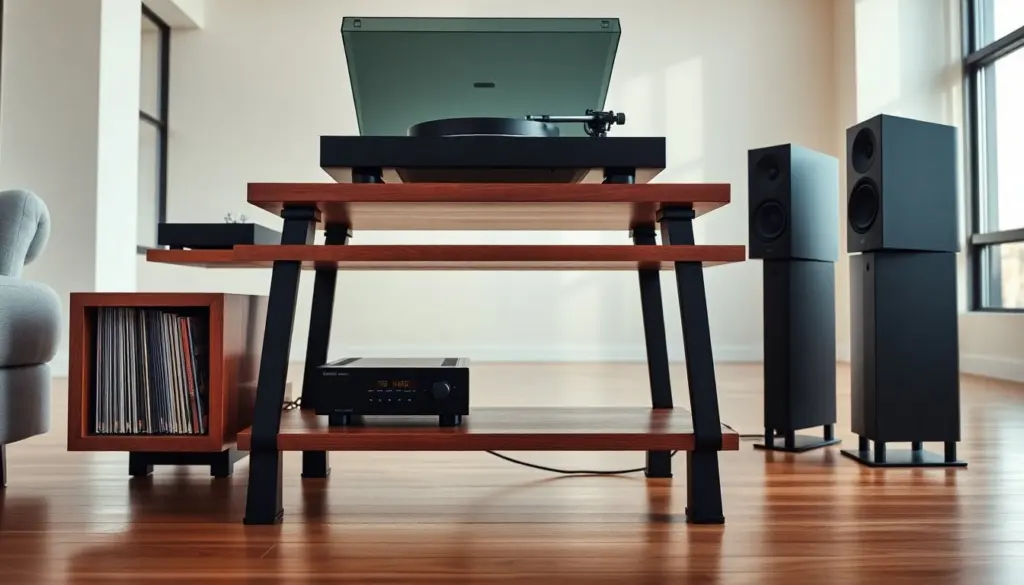
A record player stand supports a turntable and protects records. It improves sound by reducing vibration and organizing gear. The right record player stand fits device size, weight, and room layout. This guide explains why they matter, how to choose them, common types, and simple care steps for long life.
Key Takeaways
- A record player stand reduces vibration and improves sound quality by providing stable support and proper isolation for your turntable.
- Choosing a stand requires checking size compatibility, weight rating, isolation features, and storage options to fit your turntable and room layout.
- Popular stand types include open racks for airflow, closed cabinets for dust protection, wall mounts for space-saving, and modular systems for flexibility, each balancing benefits and trade-offs.
- Proper placement away from foot traffic and speakers, along with leveling and isolation enhancement, is essential to maintain optimal sound and equipment longevity.
- Regular maintenance such as cleaning, tightening fasteners, replacing isolation feet, and proper record storage prolongs both the stand’s and turntable’s lifespan.
Why Investing In A Dedicated Record Player Stand Pays Off
A record player stand delivers stability and lowers vibration. It isolates the turntable from footfall and speaker energy. It keeps the cartridge tracking clean and reduces wear on records. It provides a proper height so they place the tonearm at the correct level. It creates airflow that prevents heat buildup around electronics. It offers storage so they organize records and accessories. They also improve room aesthetics and make playback setup repeatable. For collectors, a record player stand protects investment and saves future repair costs.
How To Choose The Right Stand For Your Turntable
They check three factors before buying a record player stand. They confirm size, weight rating, and isolation features. They place the turntable on a flat surface and measure width and depth. They compare those dimensions to the stand shelf. They check the stand weight rating to ensure it supports the turntable and any added gear. They inspect isolation features such as dedicated feet, floating shelves, or mass-loaded shelves. They consider storage needs for records, preamps, and cables. They plan cable routing so they avoid strain and electromagnetic interference.
Key Specs To Check: Size, Weight Rating, Isolation, And Storage
They measure the turntable plus dust cover when closed. They choose a shelf that offers at least one inch of clearance on each side. They select a stand with a weight rating 25% higher than the turntable weight. They prefer stands with decoupling feet or separate isolation platforms. They choose non-resonant materials such as well-braced wood, steel, or damped MDF. They check for enclosed storage if they need dust protection for records. They verify shelf depth for record boxes and sliding drawers. They plan ventilation if they place electronics inside closed cabinets.
Popular Record Player Stand Types And Their Trade-Offs
Open rack stands offer airflow and easy access. They allow quick cable changes and better heat dispersion. They also let dust reach the platter more easily. Closed cabinet stands keep dust away and hide cables. They can trap heat and require ventilation for amplifiers. Wall-mounted shelves save floor space and reduce vibration transfer. They require strong anchors and careful leveling. Dedicated audio towers combine storage with isolation but cost more and weigh more. Furniture-style consoles look attractive but can transfer floor vibration. Modular stands let they expand later and mix materials. Each stand type balances isolation, storage, cost, and style. Buyers match the stand type to the room and gear needs.
Placement, Setup, And Ongoing Care Tips For Best Sound And Longevity
They place the record player stand away from heavy foot traffic. They keep the stand away from speakers to avoid coupling. They level the shelf using a small spirit level and adjustable feet. They mount isolation pads or cones under the turntable if the stand lacks isolation. They route power and signal cables apart to lower noise. They use quality shielded cables for phono connections and ground wires where needed. They clean the shelf surface with a soft cloth and mild cleaner to remove dust.
They inspect fasteners and shelf joints every six months. They tighten loose screws and re-level the stand after moves. They replace worn isolation feet to maintain performance. They store records vertically and away from direct sunlight inside the stand. They use a dust cover on the turntable when idle. They clean records before playback to reduce stylus wear. They schedule a cartridge alignment and tracking check after major moves or every year. They avoid placing heavy objects on the platter or tonearm. They keep liquids away from electronics and use a surge protector for power.


Leave a Reply