
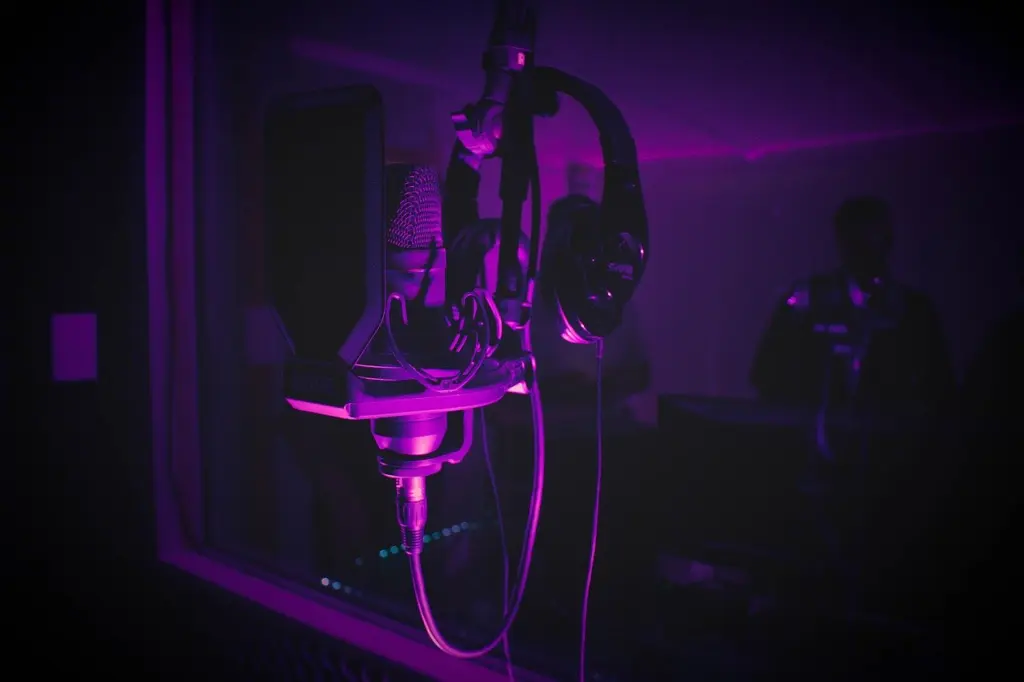
The best headphones for podcasts depend on the job: wired closed-back studio headphones for recording, closed-back or open-back pairs for editing depending on room noise, and comfortable wireless pairs for casual listening.
If you are still assembling a kit, start with our guide to podcast equipment for beginners, then use this page to decide which headphones fit each stage of your workflow.
How closed-back and open-back headphones differ
The housing design decides where a pair is useful. Closed-back headphones seal around the ears to block outside noise, which makes them well suited to recording or editing in noisy spaces for long periods. Open-back headphones let air and sound pass through the ear cups, giving a more natural, spacious sound that is best for mixing in quiet environments.
Closed-back is also the more common design among studio headphones. One large retailer’s open/closed filter listed 278 closed models, 108 open and 7 semi-open at the time of checking, so closed-back pairs give you the widest choice at every price.
Headphones and mic bleed
Headphones do affect mic bleed, mainly through their design. Open-back cups let sound pass through them, so a microphone placed close to a speaker’s head is more exposed to what the headphones are playing. Sealed closed-back cups are the safer default whenever a microphone is in the same room. Choose headphones for monitoring and a separate microphone for capture: most headset microphones are not good enough for podcasts.
Specifications worth reading
Three numbers on a spec sheet are useful, and none of them is worth chasing on its own.
- Frequency response: a wider range is generally better, and 3D Insider links it to the depth of the audio, citing extension below 20Hz as a sign of stronger bass. The Beyerdynamic DT 770 Pro is listed at 5Hz–35kHz and the AKG K371 at 5Hz–40kHz, according to talks.co.
- Driver size: the same 3D Insider guide says to expect at least 40mm. The Audio-Technica ATH-M50x uses 45mm drivers, per its Sweetwater listing.
- Impedance: this is rated in ohms. The DT 770 Pro model covered here is the 80 ohm version. Compare the rating with the headphone output on your interface or recorder before you buy.
Picking headphones by podcast task
Recording, editing and listening ask different things of a pair of headphones, so a single “best” rarely covers all three. Match the pair to the task you do most.
Recording
For recording, choose wired, closed-back headphones. The Beyerdynamic DT 770 Pro (80 ohm) is described by talks.co as a studio favorite. The AKG K371 is a closed-back, over-ear design with lightweight, foldable ear cups that block distractions. The ATH-M50x is another closed-back over-ear option from the same retailer’s range. Any of these keeps your monitoring feed contained while the microphone is live.
Editing
Closed or open for editing comes down to your room. If you edit in a noisy or shared space, or for long stretches, closed-back is the practical choice because it blocks outside noise. If your room is quiet, an open-back pair gives a more natural, spacious sound that suits mixing. The Sennheiser HD 650 is an open-back reference model listed at $379.95 by Sweetwater, and it is a serious spend that only makes sense with a quiet room.
Comfort matters more during editing than during a short take. According to 3D Insider, the wired Sony MDR7506 weighs 8.81 ounces and the wired Sennheiser HD280PRO weighs 10.05 ounces, so the Sony is the lighter pair for long sessions. The MDR-7506 is a closed-back professional model listed at $113.00 at Sweetwater.
Listening
Listeners do not need studio neutrality, so comfort and convenience can lead. A closed-back pair keeps commuter noise out. A Bluetooth pair removes the cable altogether. The Sony WH-CH520 is listed at $39.99 with Bluetooth and USB-C charging, and talks.co calls it a practical choice for testing podcasting.
Once you have a comfortable pair, put it through a dialogue-heavy series such as The Best True Crime Podcasts of 2026: 10 Must-Listen Series for Every Type of Listener – Soniqcast.
Headphone comparison by price, impedance and type
The table puts the models above side by side. Use it to narrow the field by type first, then by price.
| Model | Type | Impedance | Price | Planning use |
|---|---|---|---|---|
| Beyerdynamic DT 770 Pro | Closed-back, wired | 80 ohms | $199.99 | Recording and long edits |
| AKG K371 | Closed-back, over-ear | Not specified | $185 | Recording where weight and folding matter |
| Audio-Technica ATH-M50x | Closed-back, over-ear | Not specified | $159.00 | All-round studio monitoring |
| Sony MDR-7506 | Closed-back, wired | Not specified | $113.00 | Lighter pair for long sessions |
| Sennheiser HD 650 | Open-back | Not specified | $379.95 | Mixing in a quiet room only |
| Samson SR950 | Wired, noise-blocking | Not specified | $69.99 | Budget recording and editing |
| Audio-Technica ATH-M20x | Closed-back | Not specified | $59.00 | Entry-level monitoring |
| Sony WH-CH520 | Bluetooth | Not applicable | $39.99 | Listening and trying podcasting |
| Behringer BH470 | Closed-back, over-ear | Not specified | $22.90 | Lowest-cost closed-back entry |
Figures come from the Sweetwater headphone listings and the talks.co podcast headphone guide, and prices differ by retailer: the DT 770 Pro is listed at $169.99 on talks.co and $199.99 at Sweetwater.
Budget headphones for podcasting
A good budget pair is a wired, sealed one. The Samson SR950, at $69.99, blocks outside noise and delivers clear, detailed sound, and it connects by a 1/8 in plug with a 1/4 in adapter, which covers most interfaces and recorders. Further down, the ATH-M20x at $59.00 and Behringer BH470 at $22.90 are monitoring headphones listed at Sweetwater.
If you are not yet sure podcasting will stick, the $39.99 Bluetooth WH-CH520 is the lowest-risk way to start. It is a listening pair first, so move to a wired closed-back model once you begin recording with a microphone.
Connecting headphones to your recording setup
Wired headphones plug into the headphone output of an interface or recorder, so check the plug size and bring an adapter if the output is the other size. Our walkthrough, How To Use An Audio Interface: A Practical Starter Guide For Faster, Cleaner Recordings – Soniqcast, covers the monitoring side of that setup. Keep the headphones on your head only for monitoring, and keep the microphone separate from them.
Frequently asked questions
Which headphones are best for recording podcasts?
Wired closed-back studio headphones, such as the Beyerdynamic DT 770 Pro or the AKG K371, are the safest choice for the recording desk.
Closed or open for editing?
Choose closed-back if your editing space is noisy, and open-back only if the room is quiet enough for it, as talks.co recommends for mixing.
What is a good budget pair?
The wired Samson SR950 is a sealed, clear-sounding budget option, and the Bluetooth Sony WH-CH520 is the cheapest way to start listening.
Do headphones affect mic bleed?
Yes. Open-back cups let sound pass through them, so sealed closed-back cups are the usual choice when a microphone is close to the speaker.



Leave a Reply