
| Factor | 2-way | 3-way | Planning use |
|---|---|---|---|
| Frequency split | Two bands; crossover commonly around 2–3kHz in simple designs | Three bands; the midrange driver commonly carries about 200–500Hz to 2–4kHz | Check where the crossover points fall to see which driver handles voices and instruments. |
| Room and cabinet | May suit smaller rooms or near-field listening | Larger overall, because the midrange driver sits between tweeter and woofer | Start with a 2-way for a small room or desk. Reserve floor space before shortlisting 3-way models. |
| Price and build | Typically lower cost | Typically more expensive because of the additional driver | At the same price, a well-designed 2-way can use better drivers, crossover and cabinet construction. |
| Crossover | Simpler network | More complex network to divide the range into three bands | Judge crossover quality, not only driver count. |
| Amplifier demand | May be more efficient and easier to power in lower-powered systems | Retailer view: often needs more power. DALI view: more drivers improve power handling and sensitivity | Compare each model’s own sensitivity and recommended amplifier power instead of assuming from driver count. |
Figures and design points above come from DALI’s guide to multiway speaker design and a retailer comparison of 2-way and 3-way speakers.
The 2 way vs 3 way speakers choice comes down to a dedicated midrange driver versus build quality: a well-designed 2-way can use better drivers, crossover and cabinet than a 3-way at the same price, so room and amplifier fit matter too.
Listeners still weighing speakers against other gear can start from the best headphones for music in the wider Audio Equipment Buying Guide, then return here once speakers are the plan.
Room size, cabinet size and listening distance
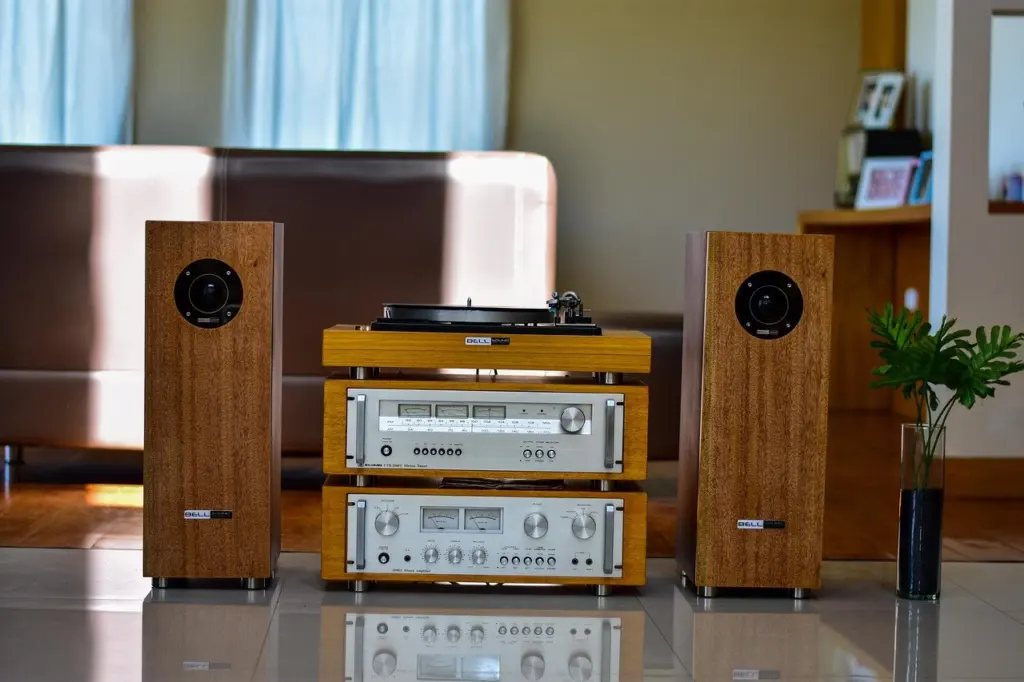
The room decides how much of a 3-way’s extra hardware you can actually use or accommodate. Retail guidance says 2-way speakers may be more suitable for smaller rooms or near-field listening environments, which means a desk, a bedroom or a small living room where you sit relatively close to the speakers.
Small rooms and desks
In a small room, the 3-way’s main extra is a dedicated midrange driver. DALI notes that this driver sits between the tweeter and the woofer, which forces the speaker to be larger overall. A bigger cabinet takes more floor or stand space, and it usually costs more, so a 2-way is the lower-risk starting point when space is tight. A 2-way also leaves more of the budget for the quality of the drivers and cabinet.
When a 3-way earns its footprint
A 3-way makes sense when you have the space and the money to do the design properly. The extra midrange driver pays off only if the crossover and cabinet are also well made. If you cannot audition both types, favour the model whose specification sheet shows frequency response and crossover details, and treat the 2-way as the safer pick for a compact room.
Amplifier fit and power
Do 3-way speakers need more power? It depends on the model, because the two sources point in different directions. The retailer says 3-way speakers often require more power and amplification to drive all three drivers effectively, and that 2-way speakers may be more efficient and easier to power in lower-powered systems.
DALI, a speaker manufacturer, takes the opposite view. It says adding more drivers improves both power handling and sensitivity, which in its account means less amplifier wattage for the same output. Because those views conflict, driver count alone is a weak predictor of amplifier demand.
- Read the specification sheet. Sensitivity and recommended amplifier power for the exact model say more than the number of drivers.
- Match to the amplifier you own. With a lower-powered system, a 2-way is the cautious choice, following the retailer’s guidance. Only buy a 3-way if its own specifications suit your amplifier.
- Do not buy an amplifier to fit a theory. Choose the speaker first, then check that your amplifier meets that speaker’s stated requirements.
Sound and value: is a 3-way better?
A three-way design is not automatically better. KEF’s explanation of three-way design says the dedicated midrange driver leaves the other drivers free to concentrate on their own ranges. It claims that, compared with a 2-way configuration, you will notice tighter, more powerful bass, more extended highs and a cleaner midrange. That is a manufacturer’s claim about well-executed three-way designs, not a guarantee for every product at every price.
DALI’s guide gives the counterpoint that decides most purchases: a well-designed speaker with fewer drivers can use better drivers, crossovers and cabinet construction than a design with a dedicated midrange driver at the same price. The design with the extra midrange driver also needs a more complex crossover network to divide the frequency range into three bands. The simpler design is, because it needs fewer components, generally more economical.
Choose a 2-way if
- The room is small or you sit close. Near-field and smaller-room listening is where the retailer says 2-way speakers may suit better.
- The budget is fixed. Spending on drivers, crossover and cabinet quality can matter more than adding a third driver.
- The amplifier is lower-powered. A 2-way may be easier to power, subject to its own sensitivity figure.
Choose a dedicated midrange design if
- Midrange clarity is the priority. A dedicated midrange driver is the design answer to that priority, as KEF describes it.
- You have the space. The larger cabinet needs room to fit.
- The price still buys good quality. A three-way should reach the same standard of driver, crossover and cabinet as a similarly priced two-way before it earns the extra cost.
How the drivers and crossover divide the sound
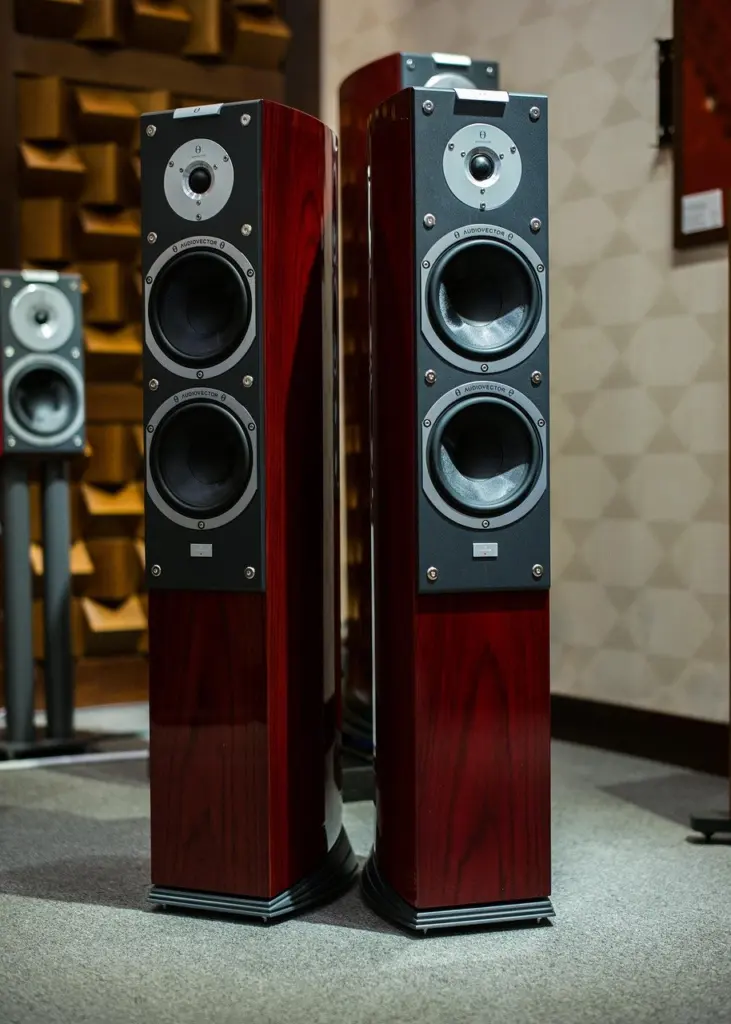
A 2-way speaker uses a woofer and a tweeter. The woofer reproduces low frequencies, meaning bass and lower midrange, while the tweeter handles higher frequencies, meaning upper midrange and treble. DALI says the tweeter is usually mounted above the woofer, as in the speaker below.
The crossover is the network that sends each part of the signal to the right driver. In simple two-way designs, DALI says the crossover point is commonly around 2–3kHz. In a 3-way system, KEF explains, the extra crossover divides the incoming audio signal into three distinct frequency bands, so there are two crossover points.
- Woofer: carries the lowest band, handing the midrange to its own driver in a 3-way design.
- Midrange driver: commonly carries about 200–500Hz up to 2–4kHz, according to DALI, and covers the critical mid-frequencies that KEF says it is free to focus on.
- Tweeter: takes the top band above the midrange driver’s range.
The practical result is that a 3-way gives voices and instruments their own driver, while a 2-way asks the woofer to cover bass and part of the midrange. Whether that matters depends on the quality of the crossover and drivers, which is why the specification sheet is worth reading before price or driver count.
Related listening setups
Speakers only reveal what the source gives them. If vinyl is part of the system, How To Clean Vinyl Records At Home: A Simple 7-Step Guide For Better Sound In 2026 – Soniqcast covers preparing records before you judge a new pair of speakers. For portable listening away from a fixed setup, Can You Bring a Bluetooth Speaker on a Plane? What Travelers Need to Know in 2026 – Soniqcast explains what to know before travelling.
Frequently asked questions
What is the difference between 2-way and 3-way speakers?
A 2-way speaker divides the signal between a woofer and a tweeter. A 3-way adds a midrange driver and a second crossover point, so the signal splits into three bands.
Are 3-way speakers better?
Not by default. Manufacturers such as KEF point to cleaner midrange, but DALI notes that a well-designed 2-way can beat a 3-way at the same price on drivers, crossover and cabinet.
Which suits a small room?
A 2-way is the safer pick. Retail guidance says it may suit smaller rooms and near-field listening, and a 3-way tends to be larger and costlier.
Why are 3-way speakers usually larger?
According to DALI, the midrange driver sits between the tweeter and the woofer, which forces the speaker to be larger overall.


Leave a Reply